Get Full Government Meeting Transcripts, Videos, & Alerts Forever!
Get email alerts on the Housing Affordability topic
No spam. Unsubscribe anytime.
Council members press for publicly financed housing fund and housing-production financing
Summary
Council members discussed proposals for a publicly financed, community-governed housing fund and a $30 million bond-backed housing production model. No formal funding decisions were made; staff and administration were asked to continue policy work and model design.
Council Member Evans brought a request to fund the creation of a publicly financed, community-governed Nashville Community Housing Fund, asking for $540,684 to seed an entity that would issue low‑interest loans and revolve capital back into future projects.
The fund, as described by advocates from the People’s Budget Coalition, would be modeled on programs in Maryland, Charlotte and Austin: bond financing would provide initial capital, loans to developers would create mixed‑income permanently affordable housing, and the loan repayments and equity would be recycled into the fund. Advocates said the fund would include long‑term affordability clauses ("permanent affordability or at least 99 years," as phrased in the discussion) and an ownership/oversight structure with staff experienced in underwriting and deal evaluation.
Council Member Parker described a related but distinct housing production request: the idea of issuing roughly $30 million in debt to finance mixed‑income affordable housing, with an estimated annual debt service cost of about $2.3 million. Parker told the committee that after talking with finance staff, he did not believe an operating allocation for that debt service was required in the current budget and that administration resources and consultant funding already in the mayor’s proposed budget could support model design over the next six to nine months. Parker said he intended to work with housing division staff and community partners to advance the production model.
Members asked whether the two proposals would conflict. Parker said they were complementary: additional Metro resources could help, but the existing mayoral budget included some support and staff time that could advance either path. Housing division staff and the finance department were identified as the primary offices to develop the structure and legal details.
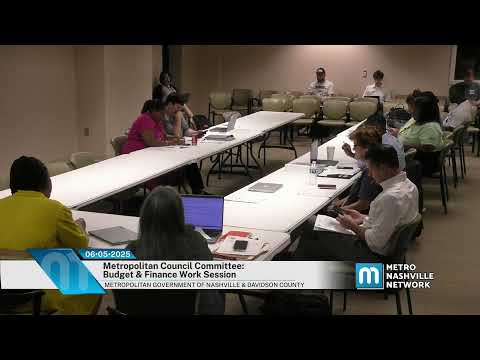
No formal motions or funding votes were taken during the work session. Council members asked staff to return with more detail, and advocates said they would provide a more detailed staffing and cost breakdown for the seed request (Evans’ $540,684 figure included funding for three staff positions: an executive director, a finance director and an administrator, according to people at the table).
The discussion closed with an agreement to continue policy and legal work with the mayor’s office, Metro Finance and the housing division; council members signaled support for further analysis but did not adopt or appropriate funds in the session.