Get Full Government Meeting Transcripts, Videos, & Alerts Forever!
Get email alerts on the Cannabis Decriminalization topic
No spam. Unsubscribe anytime.
Kennesaw council debates city-level cannabis penalties, sponsor withdraws proposal for more research
Summary
Councilmember Anthony proposed lowering penalties and adopting a local harm-reduction approach to misdemeanor cannabis possession during the May 27 work session. The proposal prompted extended debate on public safety, measurement and record impacts; the sponsor withdrew the item to allow more research and will bring it back later.
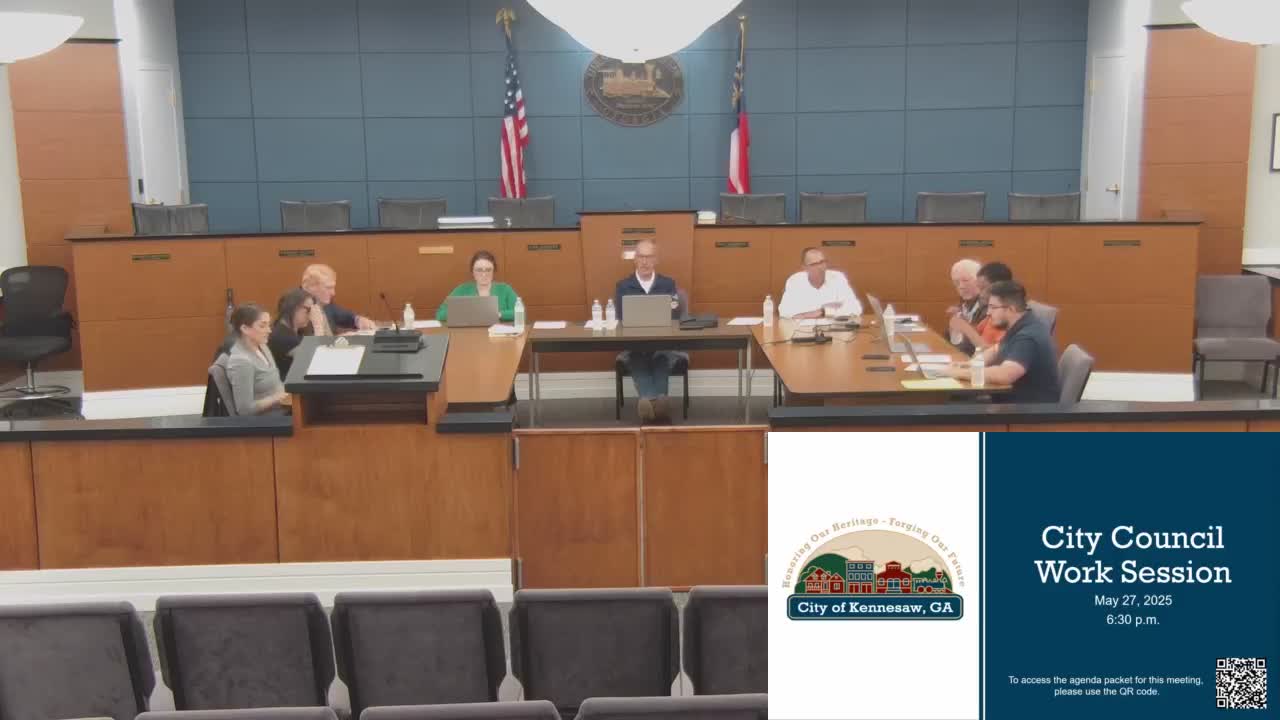
Councilmember Anthony introduced a proposal at the Kennesaw City Council work session on May 27 to lower local penalties for misdemeanor cannabis possession and to consider a harm-reduction ordinance aimed at reducing negative consequences of drug use.
The item prompted more than two hours of council discussion that ranged from historical inequities and criminal‑justice impacts to concerns about impaired driving, testing limitations and collateral consequences of a criminal record. After questions and pushback, Anthony said he would withdraw the matter for further research and bring it back later for council consideration.
A harm reduction ordinance, Anthony said, “is a law passed by a city or county that aims to reduce negative consequences associated with drug use in an effort to create a safer and equal environment.” He framed his proposal as decriminalization rather than legalization, emphasizing local limits: “As a city, yes, we are limited to what we can do in the scope of this topic, but we do have the power at the misdemeanor level.”
Anthony cited state penalties and municipal alternatives in other Georgia cities: “In Georgia, cannabis possession of less than 1 ounce with no intent to distribute is a misdemeanor and with current guidelines can be punished by up to a $1,000 fine and or up to a year in prison.” He argued for a minimum $35 fine option and for offering community service to avoid a record for first‑time offenders.
Police leadership and several council members urged caution. The police chief said the department’s principal concern is impaired driving: “the effects we see now in the city of Kennesaw is more in regards to the driving.” The chief described limits in roadside measurement compared with alcohol and said drug‑involved stops often require blood testing and further lab work.
Council members raised additional practical issues: the impact of any criminal record on employment, security clearances and educational opportunities; state and federal preemption over legalization; and whether lowering fines would materially change officer workload or public safety outcomes. Mayor (name on record) said, “I say we leave it as is. I'm I'm not likely to to change it,” emphasizing deference to state law and caution about political timing.
Council did not adopt any ordinance or change penalties. Instead, members generally agreed they did not want misdemeanor possession to lead to prison in ordinary cases and asked for more research on fines, court practice and enforcement impacts. Anthony said he would withdraw the item for now and return with more information.
The council subsequently moved into a closed session under state open‑meeting provisions; the body later ratified actions taken in closed session by unanimous vote before adjourning.
What happened next: The item was withdrawn for additional staff and legal research and may be reintroduced later by the sponsor. No change to local penalties or ordinances was approved at the May 27 meeting.