Get Full Government Meeting Transcripts, Videos, & Alerts Forever!
Get email alerts on the Public Safety Police Technology topic
No spam. Unsubscribe anytime.
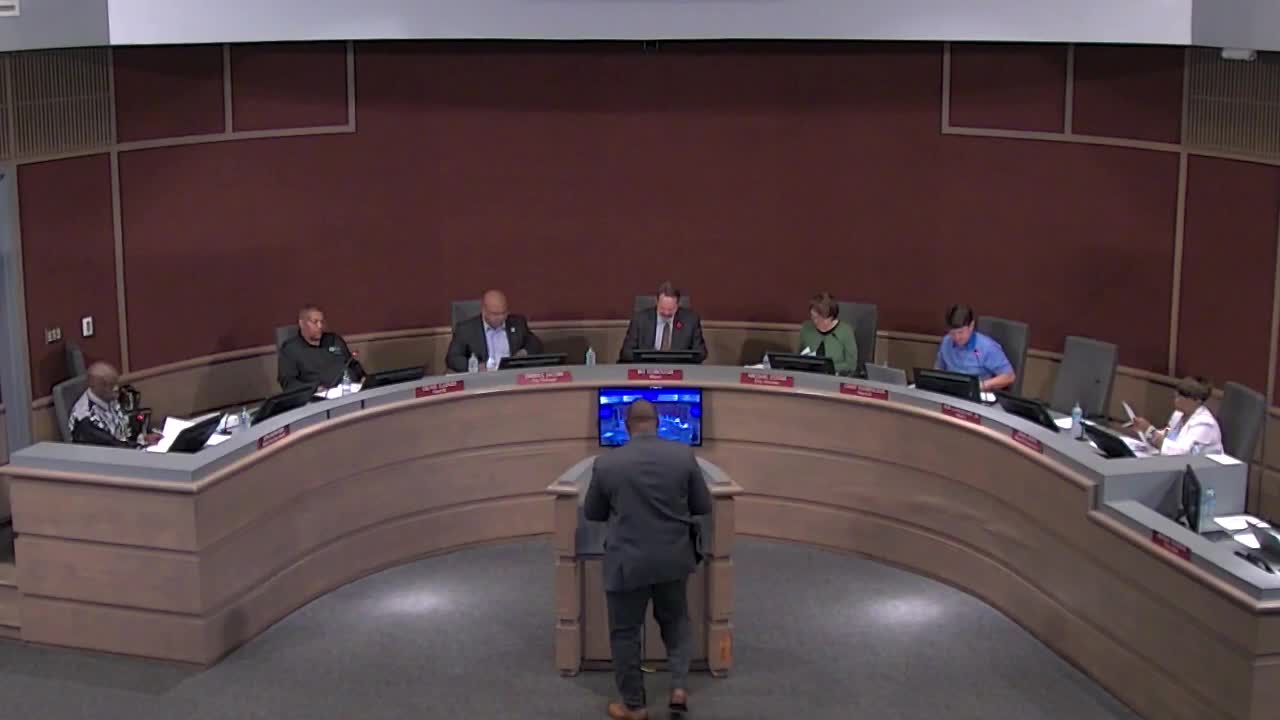
Albany leaders debate drones, pay and hiring as police present crime data
Summary
At a June 3 work session the Albany Police Department reported declining gunshot detections and ongoing homicide investigations while outlining plans for drones, license-plate readers and more civilian staff; commissioners and a public commenter pressed for more sworn officers and clearer budget increases tied to recruitment.
The Albany Police Department on June 3 told the City Commission it is using technology and civilian positions to extend public-safety coverage while also continuing active hiring and training efforts.
Chief Johnson, presenting an executive summary of January–April data, said monthly crime reports ranged from 561 in February to 665 in April and that clearance rates remained “consistently strong,” including an 89% clearance of investigative cases in February. He said Raven gunshot-detection activations fell from a January peak of 306 to 194 in April, a 36% decline.
The department outlined planned technology investments contingent on budget approvals: 24 additional license‑plate readers funded by a 2022 JAG grant, expanded camera and evidence‑storage capacity and a proposed drone program for first‑responder support. “We look at using technology not as a replacement for people, but as a force multiplier for our operations,” Chief Johnson said.
Why it matters
The discussion paired two persistent public concerns — staffing and visible patrols — with the department’s drive to deploy cameras, license‑plate readers and a drone program as ways to increase coverage without putting a sworn officer at every scene immediately.
Discussion and questions focused on whether technology should take precedence over hiring more sworn officers. A resident who spoke during public comment said rising taxes have not translated into more police on patrol: “At $50,000 a year, it is not acceptable,” the resident said, criticizing starting pay and asking for recruitment incentives. Commissioners and the chief responded that the city has increased starting pay in recent years and that recruitment and retention remain national challenges.
What the department presented
- Staffing: the department reported multiple hiring cycles; 12 recruits were hired in March and will begin the police academy in July. The chief said the department aims to recruit 20 candidates for the next academy cycle. He noted large applicant pools for civilian roles (e.g., 70 applicants for three civilian crime‑scene technician positions) and emphasized hiring more civilian community‑safety officers and investigators to free sworn officers for patrol duties.
- Special Investigations: Major Victor Camp said the Albany–Dougherty Special Investigative Unit, formed from a merger of the gang task force and drug unit, is now staffed at roughly 22 sworn and non‑sworn personnel and has increased gun recoveries. “We are averaging 12 guns a month here,” Major Camp said, adding the U.S. Attorney’s office is adopting qualifying gun cases under Project Safe Neighborhoods.
- Technology: the department described planned deployment of 24 LPRs funded by JAG, an active evidence vault for real‑time video analysis, Camera Connect business camera integration and camera trailers for events. The proposed drone program would use civilian operators to launch drones from distributed sites to assess calls more quickly than officers can arrive, the chief said.
Decisions and budget implications
The drone program and some body‑camera upgrades were presented as contingent on future fiscal‑year approvals; the commission had earlier discussed a $200,000 increase in the draft budget to support a drone initiative. The department said some tech investments would be phased in and that civilian positions could staff a 24/7 real‑time information center if funded.
Voices at the meeting
Commissioners repeatedly pressed for both technology and more visible officers. Commissioner Vilnius Gaines noted prior steps to raise pay and urged continued recruitment. Mayor Bo Dura and other commissioners praised community engagement efforts the department described, such as a Brown Bag Lunch outreach program and youth initiatives, while reiterating the public’s desire for more boots on the ground.
Ending
The presentation framed technology as a complement to — not a substitute for — sworn officers, while commissioners and residents stressed they want to see more officers visibly patrolling neighborhoods. Several planned technology purchases remain subject to budget approval, and the department said it will continue to send recruits to the police academy and expand civilian positions that support investigations and community outreach.