Get Full Government Meeting Transcripts, Videos, & Alerts Forever!
Get email alerts on the Public Safety Police Funding topic
No spam. Unsubscribe anytime.
Albany leaders weigh drones, pay and civilian operators as police recruitment lags
Summary
At a June 3 work session the Albany City Commission and police leaders discussed proposed budget changes that add $200,000 for a police drone program, staffing strategies that use civilian operators and recent crime and technology data while residents pressed for higher officer pay and faster hiring.
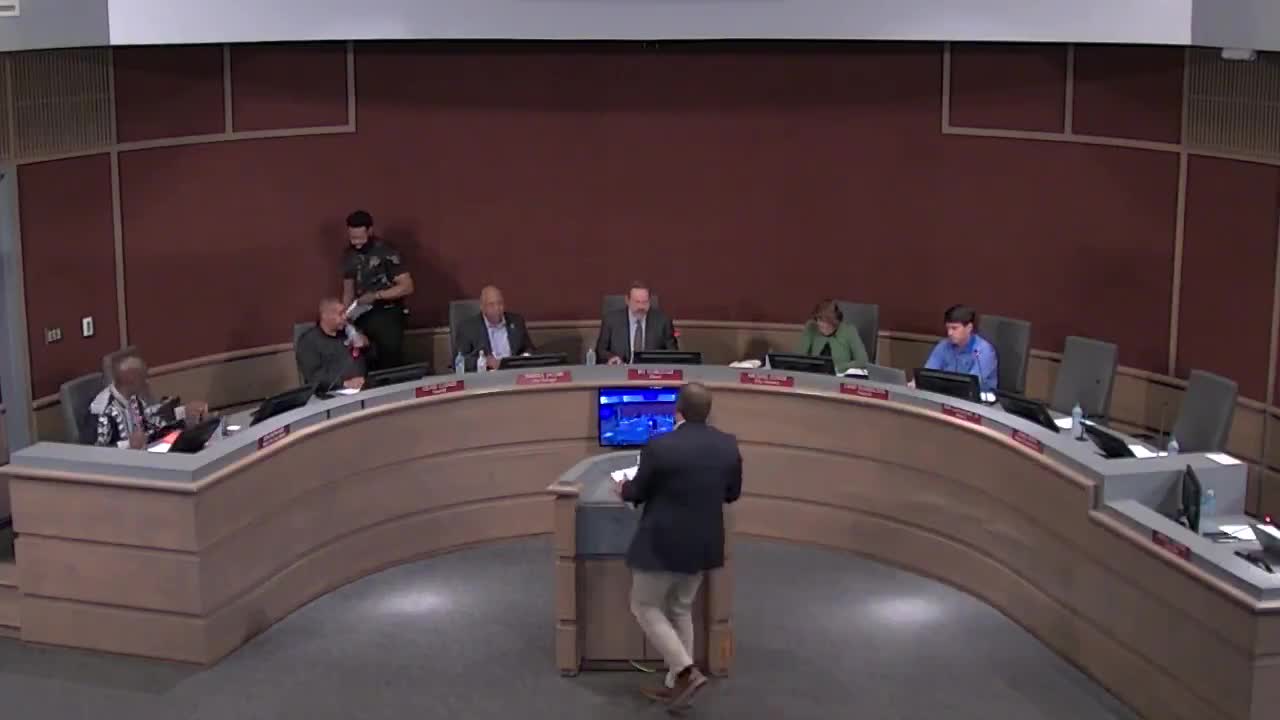
Mayor Bo Dura and the Albany Police Department presented a revised fiscal-year budget proposal and a public-safety update at the City of Albany Commission work session on June 3, 2025, alongside public comment pressing the commission to increase police pay and staffing.
The revised budget presented before the commission includes a $200,000 increase to fund a police drone initiative, and a separate $372,000 addition for an extended-day recreation program offset by projected program revenues. Finance staff said those are the chief modifications since the initial budget proposal. "We increased by 200,000 for the drone initiative in the police department," the finance presentation said.
The budget and public comment came ahead of a detailed Albany Police Department presentation that summarized crime statistics from January through April and described expanded technology: Raven gunshot-detection activations, Flock license-plate readers and an "evidence vault" for video analysis. The department reported a decline in Raven activations from January's 306 to April's 194 and said clearance rates for investigative cases have been strong.
Chief Johnson, speaking for the Albany Police Department, described technology as a ‘‘force multiplier’’ for limited staffing and said the city is planning a phased drone deployment and further camera and license-plate-reader coverage funded in part by previously approved JAG (Justice Assistance Grant) funds. "I can't put a police officer on every corner, but I can just about put cameras on every corner," he said, and argued that drone operators need not be sworn officers: "If I can use technology and the people who can operate the technology don't have to be police officers, then by using the drone there for first responder folks."
Major Victor Camp, who leads the Albany–Dougherty Special Investigative Unit, said consolidation of drug and gang task-force resources into a single unit improved casework and weapons seizures, and that many gun cases are being referred to the U.S. Attorney's Project Safe Neighborhoods program. Camp reported the unit seized 60 handguns between January and May 2025 and described training initiatives to certify investigators.
A resident who had signed up for public comment told the commission rising taxes have not translated into more officers in the city. "At $50,000 a year, it is not acceptable," the speaker said of an earlier starting-salary figure and urged the commission to raise pay to attract and retain officers. Commission discussion later cited the city's recent pay adjustments: commissioners and staff said the FY25 starting salary for officers was $51,850 and that a proposed 3% across-the-board adjustment would move that figure to about $53,405.
Commissioners and the chief acknowledged the city is investing in recruitment and retention but also described national and local recruitment challenges and high attrition. The chief said the department has hired multiple classes of recruits and that new hiring classes and civilian community-safety positions are being expanded to cover some functions currently performed by sworn officers.
No formal vote to adopt the drone program or other technology items took place at the session; commissioners heard the update and asked staff to return with phased procurement and operational details, including legal and privacy considerations. The JAG-funded license-plate-reader expansion noted in the police presentation is contingent on approval of grant funding already identified in department materials.
The discussion left two clear threads for follow-up: a request from commissioners for a detailed implementation plan and timeline for the drone and camera deployments, and continued emphasis on recruitment and retention strategies the chief said will include outreach to local colleges and expanded civilian positions to operate new technology.