Get Full Government Meeting Transcripts, Videos, & Alerts Forever!
Get email alerts on the Public Safety topic
No spam. Unsubscribe anytime.
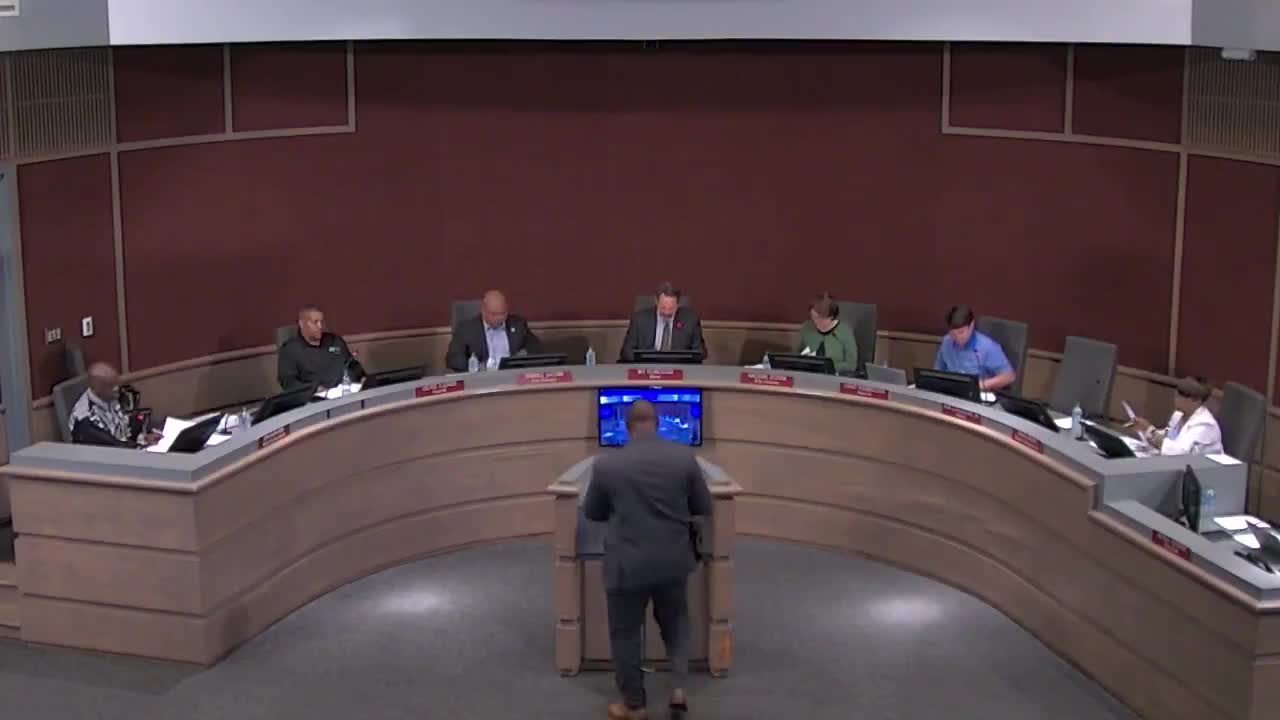
Albany police pitch tech investments as staffing shortfall continues
Summary
Albany Police Department presented crime trends and technology plans to the City Commission on June 3, highlighting declines in some gunshot alerts, expanded license-plate readers, a proposed drone-first-responder pilot and ongoing recruitment and training efforts amid staffing gaps.
Albany police told the City Commission on June 3 that they are investing in technology to supplement but not replace sworn officers as they try to address persistent gun violence and staffing shortages.
Chief Johnson, Albany Police Department, presented an executive summary of January through April data and said total reported incidents ranged from 561 in February to 665 in April, with a reported clearance rate of 89% for investigative cases in February. He said Raven gunshot-detection activations fell from a January high of 306 to 194 in April, a decline he described as a 36% drop from January levels. "We cleared 89% of investigative cases that we responded to in February," he said.
Johnson outlined technology investments the department is pursuing, including 24 additional license-plate readers funded by a 2022 JAG grant, expanded business camera integration and a proposed drone capability for first-response use. "I can't put a police officer on every corner, but I can just about put cameras on every corner," Johnson said, arguing that drones and other non‑sworn operators can act as a "force multiplier" to route officers to the highest-need calls.
Major Victor Camp, who leads the Albany‑Dougherty Special Investigative Unit (SIU), reported enforcement gains after staff increases. Camp said the SIU seized 107 guns off the street during a period when the unit was short 6–8 officers; he said the unit recovered 60 handguns from January through May of 2025 and that several cases were being adopted by the U.S. Attorney's Office under Project Safe Neighborhoods. "With the full staff, we are getting a lot more guns off the street," Camp said.
The department said some technology purchases are awaiting budget approval. Chief Johnson said the proposed drone program would be phased in and operated by trained non‑sworn personnel to accelerate scene assessment and reduce unnecessary officer dispatches. He also described plans to expand a civilian‑run real‑time information center and hire civilian crime‑scene technicians and community safety officers to shift certain tasks away from sworn officers.
Recruitment and training remain a challenge, the chief said: the department hired 12 recruits in March who will enter the police academy in July, and the city is pursuing multiple recruitment channels including local colleges. "We're always looking," Johnson said, noting high application numbers but also high attrition. Major Camp added that specialized training—gang investigator certification—was being delivered this month to 28 officers to standardize skills across the unit.
The presentation drew public comment earlier in the meeting from a resident who said taxes have risen while local police staffing and visible patrols lag. Commissioners and the chief acknowledged the need for more sworn officers and for community engagement, and they framed technology investments as complementary steps while the city continues recruitment and retention efforts.
The commission did not adopt new policy during the presentation; the department requested that the commission consider funding decisions in the pending budget cycle that would enable drone deployment, additional LPRs and civilian staffing.