Get Full Government Meeting Transcripts, Videos, & Alerts Forever!
Get email alerts on the Homeless Services Funding topic
No spam. Unsubscribe anytime.
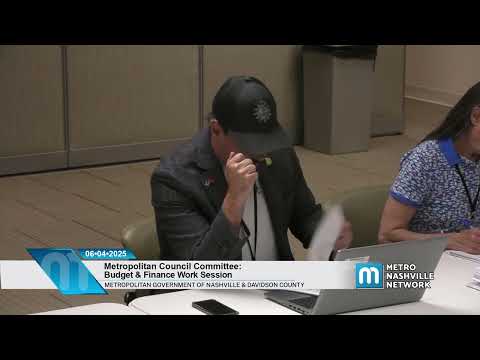
Council members debate directing $2 million in new mayoral funds to nonprofits serving people experiencing homelessness
Summary
Council member Welsh proposed reallocating $2 million in new mayoral budget dollars to nonprofits that provide direct housing services rather than expanding the Office of Homeless Services; staff outlined audit and procurement requirements and said many OHS staff positions are currently funded with ARPA one‑time dollars.
Council member Welsh asked the committee to direct about $2 million in new mayoral budget dollars toward nonprofits that provide on‑the‑ground housing services for people experiencing homelessness rather than toward additional Office of Homeless Services (OHS) staffing.
“I feel like it's important that, given what is happening, with federal funding that we are actually funding organizations that serve on the ground here and programs on the ground here that actually house people who are homeless. The office of, homeless services is actually a coordination, office, and they don't actually house anyone,” Welsh said.
Finance staff and other council members raised procedural and compliance issues. Mary Jo Wiggins of Finance reminded the committee that Metro may only approve funds for nonprofits that meet eligibility criteria in metro code, and that “the biggest 1 that takes the longest time is an audit.” Wiggins explained the audit timing rule: audited financials are deemed current for one year after the audit report date — for example, a fiscal year ending 06/30/2024 with an audit report dated Oct. 1, 2024 is considered valid through Oct. 1, 2025.
Wiggins and others described two ways to direct funds to nonprofits: (1) give money to a department, which must run an RFP or contracting process, or (2) place specific nonprofit names in the budget so funds are earmarked for them. Council members cautioned that earmarking by name can trigger RFP and eligibility requirements and that audits or updated financial reviews are often required before contracts are executed.
Committee discussion also covered American Rescue Plan Act (ARPA) money and staffing: finance staff said OHS currently has 14 FTEs funded via ARPA that will be sustained into FY26 using one‑time ARPA dollars, creating a potential “cliff” when ARPA funds end. Wiggins said ARPA allocations carry federal compliance rules limiting when new obligations can be made for new work after a given date.
Multiple nonprofit funding items were discussed by name, including requests for OpenTable, Safe Haven Family Shelter, Room In The Inn and Bloom. Some council members said they had discussed capacity with providers and that certain nonprofits have existing contracts with OHS. No formal budget action was taken; council members were asked to do departmental due diligence on potential impacts before any changes would be placed in a substitute budget.