Lifetime Citizen Portal Access — AI Briefings, Alerts & Unlimited Follows
Nominee for U.S. ambassador to WTO says he will push for reform and digital-trade commitments
Loading...
Summary
Joe Barloon, President Trump's nominee for deputy U.S. trade representative and ambassador to the World Trade Organization, told the Senate Finance Committee he supports using WTO dispute settlement as a tool for U.S. exporters while urging reforms; senators pressed him on China, digital trade and past private-sector work for Temasek Holdings.
Joe Barloon told the Senate Finance Committee that, if confirmed as deputy U.S. trade representative and ambassador to the World Trade Organization, he would work to restore U.S. leadership at the WTO, pursue cases where appropriate to expand market access for U.S. agriculture and businesses, and press for reforms to the organization’s dispute-settlement system.
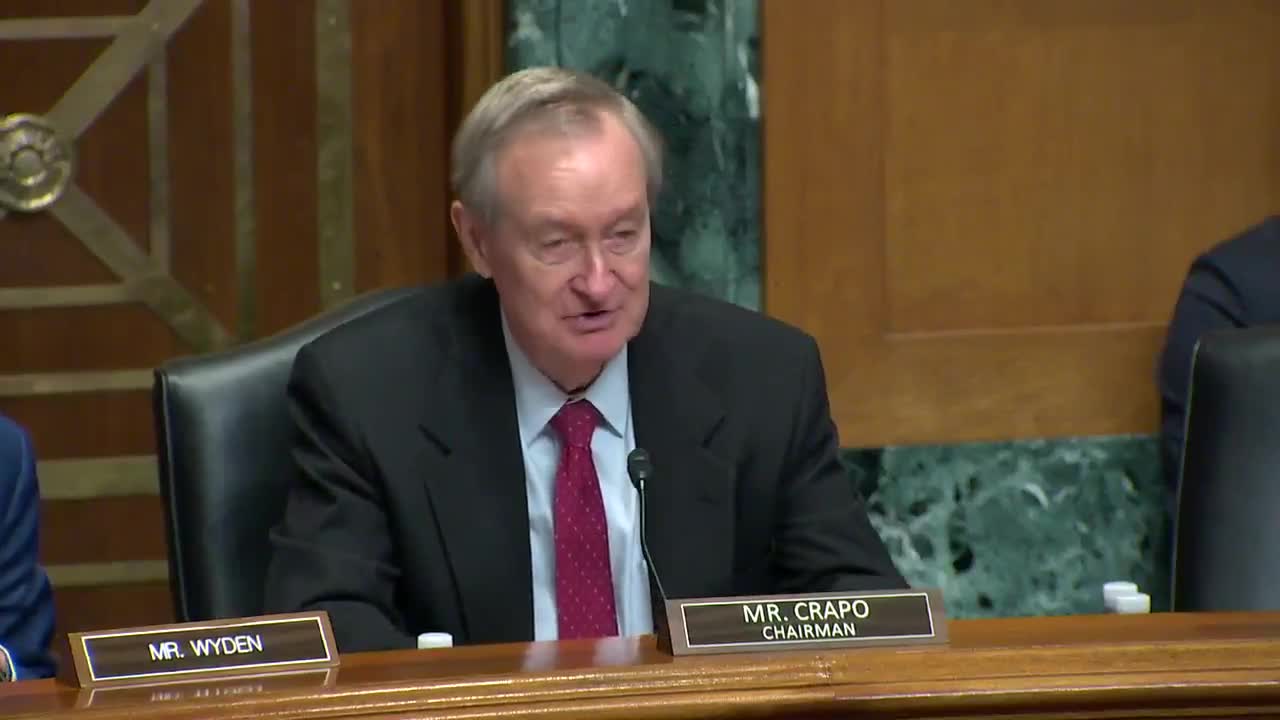
“Most definitely, I will do so,” Barloon said when asked by Chairman Mike Crapo whether he would support pursuing offensive WTO cases to benefit U.S. farmers. Barloon, who previously served as general counsel at the Office of the U.S. Trade Representative and as acting deputy USTR from 2019 to 2021, said his experience supervising WTO litigation showed both the value of dispute settlement and the need for reforms to speed and improve outcomes.
Barloon also told senators he supports advancing digital-trade commitments at the WTO, listing cross-border data flows, combating forced data localization, preventing forced technology transfer and promoting open markets as priorities. He described the WTO’s problems as arising in part from admitting nonmarket economies that do not follow its founding principles and from an appellate process that had, in his view, exceeded the role its founders intended.
Senators pressed Barloon about specific challenges. Sen. Chuck Grassley discussed opportunities with smaller trading partners to expand agricultural access; Sen. Sheldon Whitehouse and others asked how Barloon would address China’s industrial subsidies, forced labor and alleged failure to meet WTO obligations. Barloon said he would enforce members’ notification obligations, limit special and differential treatment for nonmarket economies and coordinate with like-minded countries.
Sen. Ron Wyden questioned Barloon about private-sector work for Temasek Holdings, a Singapore government-owned investment company, and whether Barloon had advised any foreign-government client on trade negotiations with the United States. Barloon replied that he had “fully and accurately responded to all questions” and that he had not directly represented a foreign entity in a trade agreement or dispute with the United States.
Why this matters: the deputy USTR/WTO ambassador represents U.S. interests in multilateral trade fora and can influence enforcement of trade rules that affect U.S. exporters and supply chains. Barloon’s prior USTR experience and private-sector clients were focal points for senators assessing his independence and potential conflicts.
The committee did not take a final vote on Barloon’s nomination during the hearing; further committee action was referenced for a later time.