
Committee hearing highlights urgency of counter‑drone, electronic warfare investments
Get AI-powered insights, summaries, and transcripts
Subscribe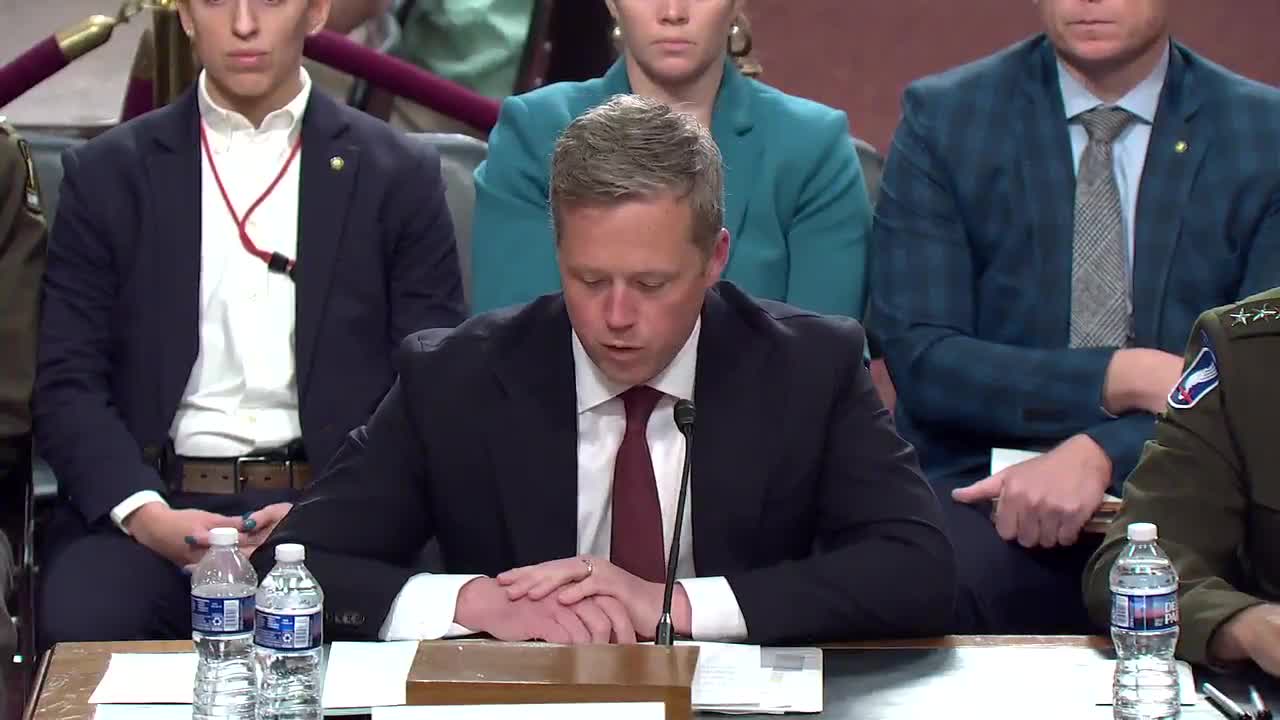
Summary
Senators and Army leaders cited recent Ukrainian operations and Russian use of drones as proof of the need to accelerate counter‑UAS, electronic warfare and adaptable acquisition. Lawmakers also flagged the unique testing role of Fort Huachuca’s Electronic Proving Ground.
Senators and Army leaders at the hearing pointed to recent events in Ukraine to underline the rapidly changing character of war and the urgency of fielding counter‑UAS and electronic warfare capabilities.
Secretary Dan Driscoll described how a recent Ukrainian operation used swarms of inexpensive drones to strike high‑value targets, saying that “at a cost of a mere tens of thousands of dollars, Ukraine inflicted billions in damage.” He and Chief of Staff Randy George said the Army needs acquisition flexibility to buy capability portfolios rather than single, long‑running programs.
Committee members and witnesses discussed the industrial‑base challenge of producing large numbers of small unmanned aerial systems at an affordable price. Chief of Staff George noted the volume of commercially produced drones abroad and said the U.S. needs to scale parts such as motors and controllers domestically.
Senators also raised electronic warfare test and evaluation capacity. Senator Kelly warned that planned reductions at the Army Test and Evaluation Command could “disproportionately impact the Army's primary electronic warfare test and evaluation center,” the Electronic Proving Ground at Fort Huachuca, Arizona, and said the proving ground’s unique geography and federally protected airspace are essential for high‑power EW testing.
Chairman Wicker told members in open session that reconciliation language contains funding for small drones and for one‑way attack drones. Several senators asked for follow‑up, classified briefings and more specific program guidance so the Army can push effective countermeasures to soldiers faster.
Ending: Witnesses agreed to accelerate prototyping and to brief the committee on the results of field tests; several senators sought classified follow‑ups on specific systems and funding details.