Get Full Government Meeting Transcripts, Videos, & Alerts Forever!
Get email alerts on the Proxy Advisers Csddd topic
No spam. Unsubscribe anytime.
Senators raise concerns over proxy advisers' influence and EU's CSDDD extraterritorial effects
Summary
Senators questioned SEC Chairman Paul Atkins about the influence of dominant proxy advisory firms ISS and Glass Lewis, and separately about the European Union's Corporate Sustainability Due Diligence Directive (CSDDD) and its potential extraterritorial impact on U.S. businesses.
Senators used the appropriations hearing to press Paul Atkins, chairman of the Securities and Exchange Commission, on two separate but related issues involving external regulatory and market influences: the operations of large proxy advisory firms and the extraterritorial reach of the European Union's Corporate Sustainability Due Diligence Directive (CSDDD).
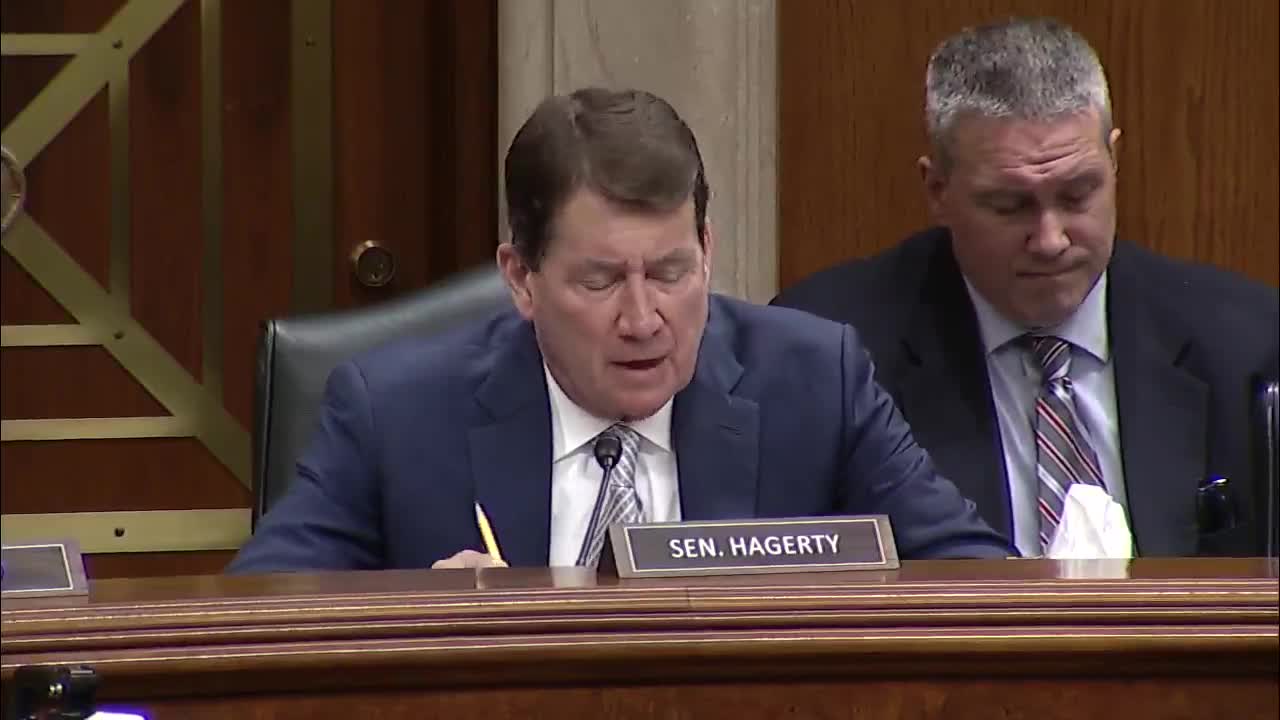
On proxy advisers, a senator criticized Institutional Shareholder Services (ISS) and Glass Lewis as a duopoly that exerts outsized influence on corporate governance recommendations. The senator said both firms are foreign-owned and accused them of pushing policy agendas that can harm shareholder returns. He referenced a 2020 rulemaking by former Chairman Jay Clayton that amended the definition of solicitation to include proxy voting advice and said that rule imposed transparency requirements. The senator said that the SEC under a later chairman "arbitrarily and capriciously reversed key parts of Clayton's 2020 rule," allowing the firms to continue practices some lawmakers view as problematic. He asked Atkins whether he has concerns about those firms. Atkins replied that he does have concerns about "gamesmanship, and abuse of the corporate governance process" and that addressing the issue will be part of the SEC's program going forward.
On the EU's corporate sustainability directive, the same senator said CSDDD imposes compliance burdens on U.S. companies and third-party liability risks that could affect small businesses in U.S. supply chains. He described the directive as "exterritorial" and urged U.S. pushback. Atkins said he shares concerns about extraterritorial effects and will coordinate with foreign counterparts to press back on harmful impacts for U.S. suppliers and manufacturers.
Why it matters: proxy advisers influence shareholder votes and corporate governance outcomes at many U.S. public companies; changes in SEC rules or enforcement could alter how proxy advice is regulated. The CSDDD raises trade and sovereignty questions if foreign rules impose costly compliance obligations on U.S. firms.
Discussion vs. decision: senators sought assurances the SEC would examine proxy adviser practices and be attentive to extraterritorial regulatory impacts; Atkins committed to review and to engage with counterparts abroad. There was no rulemaking or policy change finalized at the hearing.
Ending: senators urged the SEC to explore legal and regulatory avenues to restore transparency and accountability in proxy advice and to counter extraterritorial rules that could impose heavy costs on U.S. suppliers.