Lifetime Citizen Portal Access — AI Briefings, Alerts & Unlimited Follows
Senate appropriators press Commerce on NOAA staffing, forecasting operations and hiring freeze
Loading...
Summary
Senators pressed Commerce Secretary Lutnick on proposed budget cuts to NOAA, a recent hiring freeze and disruptions to 24/7 operations at several National Weather Service forecast offices; the secretary said meteorologists would be staffed and promised follow-up information.
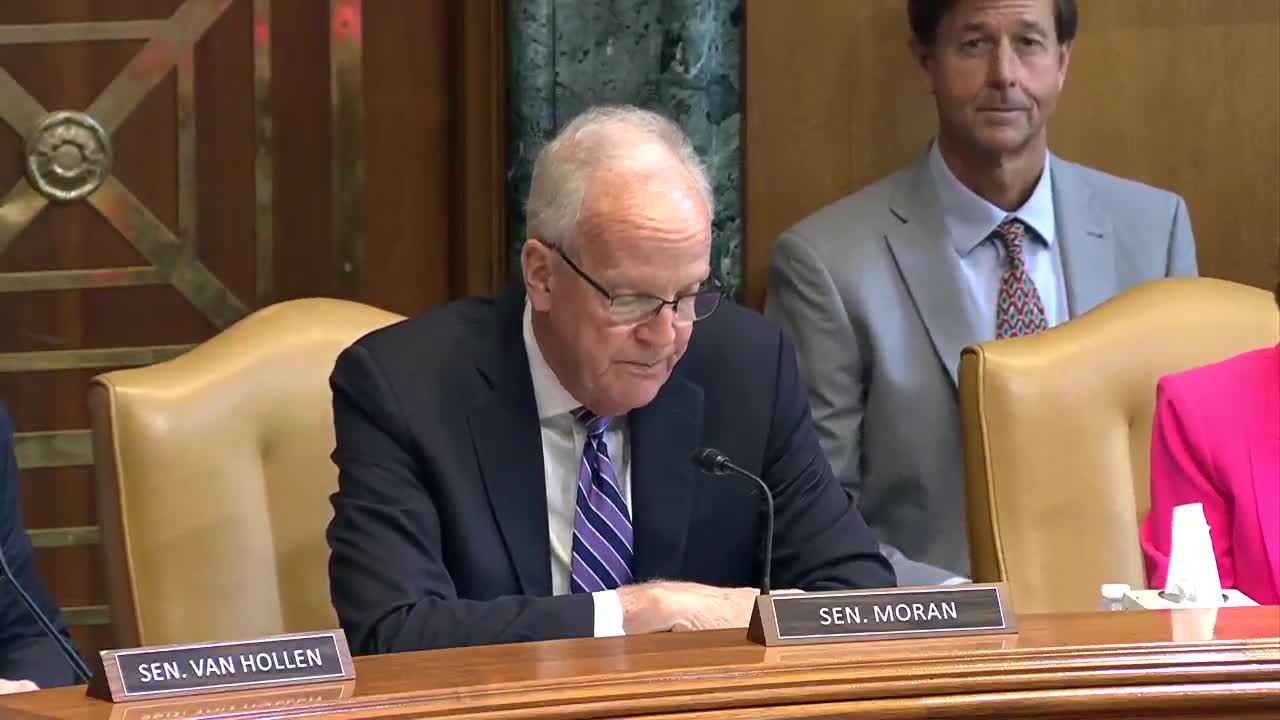
Senate appropriators pressed Department of Commerce Secretary Lutnick on June 4 about cuts in the department's fiscal 2026 budget proposal and their potential effects on the National Oceanic and Atmospheric Administration, including round‑the‑clock operations at National Weather Service forecast offices.
The exchange came after the subcommittee chair and members said the department’s budget request — which committee members described as proposing a 16.5% overall reduction to department budget authority and targeted cuts to agencies including NOAA — left them without sufficient detail about how the agency would maintain public‑safety functions. Senator Chris Van Hollen, the subcommittee's ranking member, said employees and communities have experienced “large‑scale” workforce changes and sought the department’s reorganization and reduction‑in‑force (RIF) plans as context for the budget review.
The hearing focused on whether staffing cuts had already reduced 24‑hour coverage at some field offices. Senators named Kansas, Alaska and Oregon as places where forecast offices had fallen below full 24/7 staffing, and multiple members asked whether offices such as Marquette, Michigan, would remain in round‑the‑clock operation. Secretary Lutnick said the department employed roughly 2,100 meteorologists and that the agency was “fully staffed.” He also told the panel he would work with committee staff to provide requested documents and answer letters "within a week" where possible.
Senators sought specificity about hiring and rehire actions. Senator Van Hollen and others referenced a prior reduction of 600 National Weather Service positions and said the department had moved to rehire some staff; members cited published reporting that NOAA was scrambling to fill forecasting positions ahead of severe‑weather seasons. Secretary Lutnick said NOAA staff had been granted exemptions from the administration's hiring freeze for critical forecast positions and that the department had begun rehiring.
Committee members also raised several NOAA program and facilities concerns: the Pacific Coastal Salmon Recovery Fund was cited as proposed for elimination in the department request; the Northwest Fisheries Science Center and other NOAA construction projects were described as being in need of multi‑year cost estimates that, by law, should be included in congressional budget justification documents. Senator Patty Murray asked whether the department had consulted tribes and fishing communities before proposing the salmon program cut; Lutnick said he had spoken with tribes, scientists and fishermen. He agreed to review and, if required, provide the NOAA construction project list and five‑year cost estimates to the committee.
Other safety‑critical operations came up in questioning. Senator Lisa Murkowski described a weather buoy outside Valdez, Alaska, needed for tanker departures; she said it had been out of service “for months,” and asked the secretary to help restore buoy operations. Lutnick promised to work with senators and to prioritize operational safety while modernizing systems.
The hearing record shows multiple requests to the department for: the FY2025 departmental spending plan required by law; detailed reorganization/RIF plans submitted to the White House; and a more complete FY2026 congressional budget justification. Secretary Lutnick told the subcommittee staff he would “go through your letters and to the extent I can answer them, I will happily answer you within a week.”
The subcommittee recessed for votes before additional rounds of questioning; members may submit further written questions for the official record. The hearing transcript contains a sequence of exchanges documenting the staffing, hiring‑freeze exemptions and the department's commitments to provide additional written materials to the committee.