Citizen Portal

Senators press SEC chair on FY2026 budget, staffing losses and plan to absorb PCAOB duties

3685635 · June 3, 2025

Get AI-powered insights, summaries, and transcripts

Subscribe
AI-Generated Content: All content on this page was generated by AI to highlight key points from the meeting. For complete details and context, we recommend watching the full video. so we can fix them.

Summary

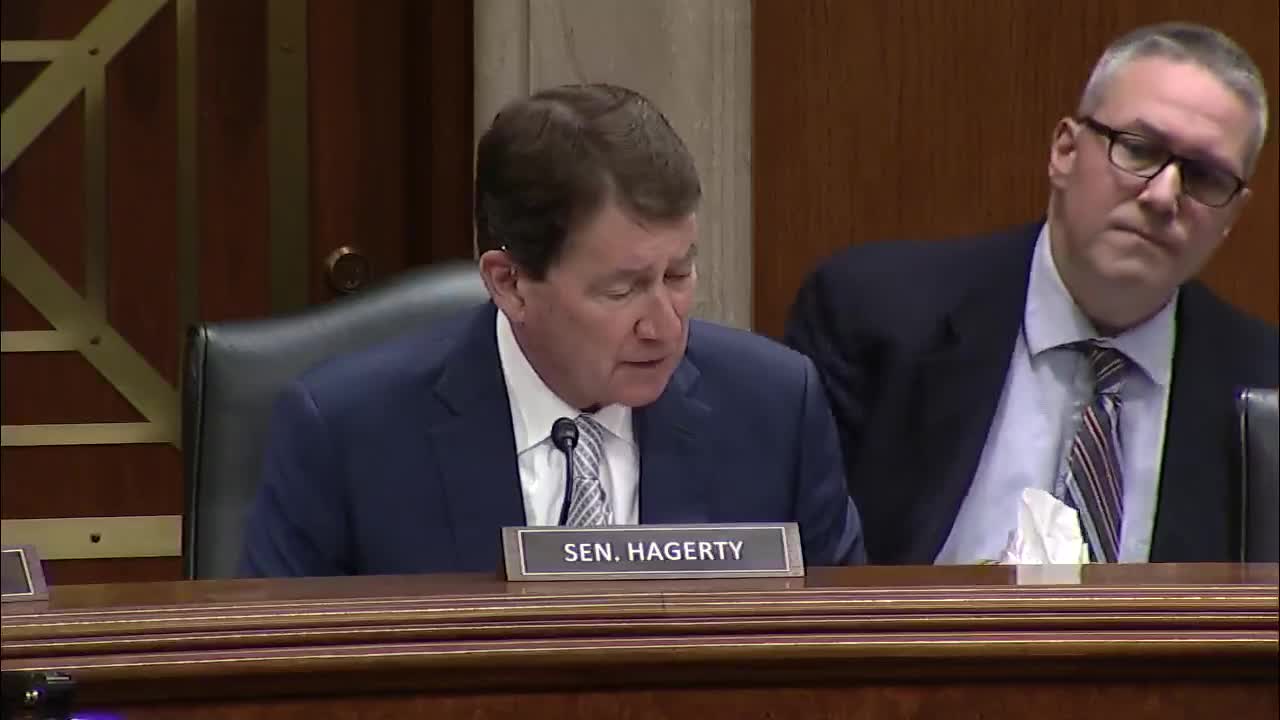
At a Senate Appropriations Subcommittee hearing on the Securities and Exchange Commission's fiscal 2026 budget request, subcommittee members pressed Paul Atkins, chairman of the Securities and Exchange Commission, on whether the agency has the staff and funding to sustain enforcement work and absorb the Public Company Accounting Oversight Board (PCAOB) function if Congress approves that change.

At a Senate Appropriations Subcommittee hearing on the Securities and Exchange Commission's fiscal 2026 budget request, subcommittee members pressed Paul Atkins, chairman of the Securities and Exchange Commission, on whether the agency has the staff and funding to sustain enforcement work and absorb the Public Company Accounting Oversight Board (PCAOB) function if Congress approves that change.

The SEC is requesting roughly $2.15 billion for fiscal 2026 to support its salaries and expenses account, Atkins told the panel: "I'm pleased to support President Trump's request of $2,149,000,000 for the SEC operations." Subcommittee members noted the agency's budget has been largely flat and that the SEC's appropriations are ultimately funded by transaction fees under Section 31 of the Exchange Act.

Why it matters: the committee framed the budget discussion around two linked questions: whether recent retirements and buyouts have materially weakened the agency's capacity to investigate complex securities violations, and whether the SEC can absorb PCAOB responsibilities without reducing oversight. Senator Van Hollen warned of a potential $300 million gap if PCAOB functions are folded into the SEC but the fee authority PCAOB currently uses is eliminated.

Members pressed Atkins on staffing levels after multiple senators raised voluntary departures. Ranking Member Reid cited agencywide voluntary departures of about 15 percent over recent months and asked whether that was harming core functions. Atkins said the agency has seen voluntary retirements and that some divisions (he said Corp Fin is slightly below the agency average) have lost senior staff, but he expressed confidence in remaining personnel: "I am very proud of the staff. I think they're very competent, and I think there's a deep well of competency there." He added that retirements create upward mobility for junior staff.

On funding structure, a subcommittee member summarized that the SEC is funded through appropriations but those amounts are paid for by fees the SEC collects under Section 31 of the Exchange Act and noted that "over the last decade, the SEC has collected approximately $20,000,000,000 in such fees." The panel discussed whether those fee-funded appropriations amount to a hidden tax on investors and whether Congress should weigh regulatory benefits against investor costs.

The PCAOB debate drew sustained questioning. Senator Van Hollen and others pressed whether the SEC has the experienced examiners to take over PCAOB inspection and enforcement work, which the senators described as vital for auditing and investor protection. Atkins said the SEC does not currently perform that function but suggested that, if Congress directed a merger and provided funding, the SEC could absorb PCAOB personnel and carry out the oversight work. "If it's folded into the SEC and we get the funding, we could take over that function using the examiners from the PCAOB," he said. Senators flagged a potential shortfall in the SEC's current budget: Van Hollen noted the PCAOB's current budget is about $400 million, while Atkins said the SEC has roughly $100 million of available funds that could be applied in a transition, leaving a gap if full functionality were to be preserved.

The hearing produced no formal appropriations action; members kept the record open for questions for the record. The committee recessed for votes and adjourned at the end of the hearing.

Discussion vs. decision: the session was a hearing and discussion; there was no committee vote to change authorities or reallocate funds. Senators asked for follow-up information and for the SEC to provide additional details on staffing and funding implications if PCAOB responsibilities are transferred.

Ending: the subcommittee chair said the record would remain open for one week for members to submit questions for the record before adjourning the hearing.