Get Full Government Meeting Transcripts, Videos, & Alerts Forever!
Get email alerts on the State Legislation Permits Enforcement topic
No spam. Unsubscribe anytime.
Staff outlines California permit‑extension, enforcement and general‑plan changes in legislative update
Summary
Planning staff briefed the commission on recent state laws affecting entitlement expiration during litigation, automatic entitlement extensions, expanded attorney‑general enforcement and new general‑plan element deadlines.
City planning staff delivered a legislative update on state actions affecting entitlements, permit extensions and enforcement during the June 5 meeting.
The presenter summarized several recently enacted bills and their implications for local land‑use approvals. "This law clarifies that an entitlement does not expire while litigation is pending," staff said when describing AB 2117. Staff also summarized an 18‑month extension for certain housing entitlements issued before Jan. 1, 2024 (identified in the presentation as AB 1561) and noted that CEQA and Brown Act timing remain distinct from the entitlement clock. The presentation emphasized that the extension does not apply to post‑entitlement permits such as building permits.
Key changes and implications
- Entitlement protection during litigation: AB 2117 (as described) prevents local entitlements from expiring while litigation is pending, removing the need for applicants to seek repeated extensions during prolonged court challenges. Staff said this applies to entitlements (CUPs, design review permits, etc.) and not to building permits.
- Automatic extensions for earlier entitlements: Staff described a provision extending housing entitlements issued before Jan. 1, 2024 by 18 months when their expiration dates would fall before Dec. 31, 2025.
- Stronger enforcement tools: Staff said recent changes expand the attorney general's enforcement reach for housing‑law violations and can include financial penalties; failure to ministerially approve certain housing projects in a timely fashion may expose jurisdictions to fines and potential redirection of state funds if penalties are not paid.
- Bonding and litigation posture: New provisions discussed shift burdens related to bond posting in litigation over housing projects, making plaintiffs demonstrate undue financial hardship when a defendant moves for a bond to cover potential litigation costs.
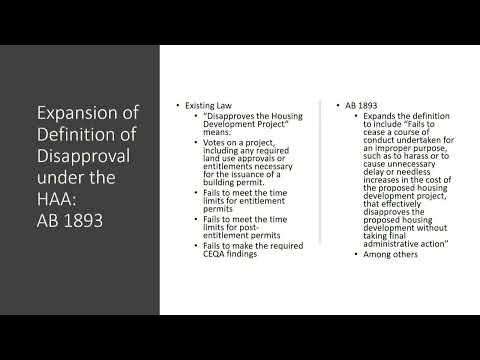
- Expanded definition of disapproval under the Housing Accountability Act and concerns about procedural ‘‘gamesmanship’’ where repeated delays could be treated as a de facto disapproval.
- General plan element deadlines: The presenter reminded the commission that state law now requires updates to certain general plan elements on a schedule; staff noted the Open Space element RFP is active and deadlines for circulation and conservation elements require attention (staff identified target dates for completion in 2026–2028).
Staff recommended the commission and department track these statutes as they affect entitlement timing, appeal risk and workflow, and flagged the need for updated contract work on general‑plan elements. Commissioners asked clarifying questions; staff said more detailed analyses will be presented as draft ordinances or code‑amendment options if needed.
No action was taken; the presentation was informational.