Get Full Government Meeting Transcripts, Videos, & Alerts Forever!
Get email alerts on the Land Use And Development topic
No spam. Unsubscribe anytime.
Developer and town discuss second amendment to Stoneridge development agreement, lower density and new funding approach
Summary
Town staff and developer Tom Lowe discussed a proposed second amendment to the Stoneridge development agreement that would reduce density, extend the agreement and change how infrastructure costs are funded.
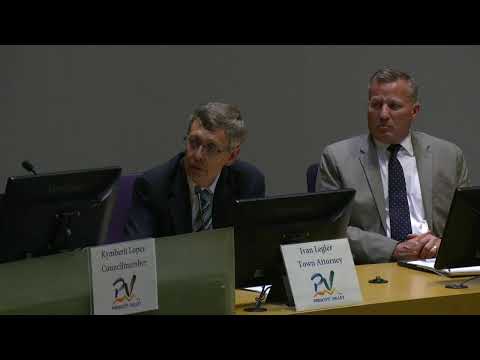
Town staff and Stoneridge owner Tom Lowe presented background and a proposed second amendment June 5 to the long-standing Stoneridge development agreement, covering decades of prior amendments and a plan to reduce density while preserving community amenities.
Town planner/attorney provided historical context: the project began as Links Creek Ranch in 1994 with an original annexation and master plan proposing roughly 5,000 units. Subsequent amendments reduced the anticipated buildout (the transcript references later reductions to about 3,000 units and to 2,832 units under the current zoning). The presenter said the developer's team previously delayed work during the 2008 recession and that a reorganization and bankruptcy process followed; Suncor and Pinnacle West were previous corporate participants, and later Tom Lowe's Univest entities assumed obligations.
Tom Lowe told the council his revised approach reduces density, rounds out housing types, structures funding so the town can use developer payments to build infrastructure where the town sees fit, expands trails and public access to U.S. Forest Service lands for Prescott Valley residents and preserves the golf course as a community amenity open to the public. "Our family thinks we figured out how to make these new goals work with the reduced density and whatnot and are supportive of this plan that we've come up with," Lowe said.
Staff described the mechanics under consideration: rather than requiring the developer to build specified giant infrastructure items up front (historically including a proposed bridge and multi-lane roads tied to earlier unit thresholds), the amendment would extend the development agreement term (staff referenced extending to 2045 in discussions) and reduce the maximum unit count in line with current market and water constraints. Staff and the developer said new per-unit payments would flow to the town and could be used to fund improvements "as needed," giving the town flexibility to time projects in a way that leverages prior public investments.
The transcript records that 232 dwelling units have already been platted; staff said remaining entitlements under prior figures would have allowed many more lots but the new amendment would lower the ultimate permitted number of units. Councilmembers asked when model homes and sales activity last occurred (the developer said roughly four years ago) and pressed staff on which build phases would trigger improvements such as paving the west leg of Old Black Canyon Road; staff replied the triggers are tied to where units access that roadway and that the funding approach could allow the town to advance work sooner if council chose.
No council vote was taken at the study session. Staff said they will bring the proposed amendment forward for formal consideration; council questions focused on timing, phasing, preservation of community uses (clubhouse and golf course), water availability and the mechanics of per-unit funding to the town.
The developer and town staff said there have been conversations with Stoneridge residents and HOA leaders, and the developer said community events are held at the golf-course facilities and that the course and restaurant are open to the public.