Get Full Government Meeting Transcripts, Videos, & Alerts Forever!
Get email alerts on the Utility Billing topic
No spam. Unsubscribe anytime.
Pasco staff weigh shifting utility‑billing responsibility to property owners to reduce costs, streamline deposits
Summary
Finance staff proposed code changes to move account responsibility back to property owners, eliminate the tenant‑deposit process that consumes staff time, and update Pasco Municipal Code 3.65; council asked for more analysis and alternatives after staff described state law limits on shutoffs and software constraints.
At a Pasco City Council workshop, interim finance staff introduced proposed amendments to Pasco Municipal Code 3.65 to change how tenant utility accounts and deposits are managed, a step staff said would reduce administrative time and the volume of uncollectible accounts.
Interim Director Garcia said a 2013 change narrowed deposit requirements to tenant accounts only; the current process consumes substantial staff time and, after a recent utility‑billing software conversion, the process now takes roughly four times longer than before. Garcia said tenant accounts represent about 11% of the city’s total utility accounts and that managing deposits for tenants and associated record‑keeping equates to about one full‑time equivalent staff position. Garcia told council the city has $56,000 in accounts that have been written off or are in the process of being written off.
Garcia proposed shifting responsibility back to property owners (the city’s prior practice) to eliminate the deposit program and free staff capacity; staff showed a comparison that most peer cities place account responsibility with property owners. Staff and the utility billing manager explained constraints: (1) a Washington state law effective April 2023 prohibits shutoffs during extreme heat events; (2) state law (RCW) limits the amount of past‑due charges collectable via shutoff to roughly four months of charges; and (3) the new billing software does not support the city’s historical deposit workflow without more manual customer interactions. Utility billing manager Priscilla said the software can accommodate deposits but only if customers open tenant accounts in person and pay on the spot — a customer‑unfriendly step that would shift, not eliminate, administrative burden.
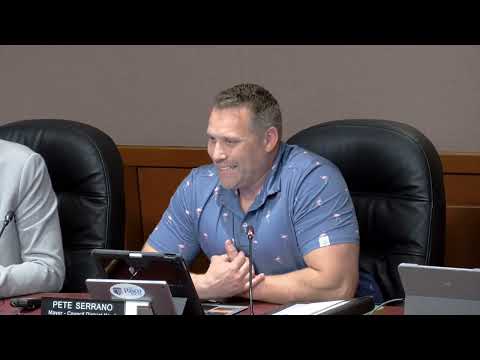
Councilmembers raised equity and enforcement questions. Councilmember Armster said he opposed shifting account responsibility to owners because unpaid tenant bills should not be the owner’s burden. Councilmember Zabel and Mayor Serrano said they were more open to the idea if the result did not shift costs onto other ratepayers; they noted alternatives such as higher deposits or improving collection practices. Staff offered to return with additional options, including a higher deposit amount, software workarounds, and more detailed peer‑city examples. No ordinance or vote was taken; staff said they would come back with alternatives and more data.