Get Full Government Meeting Transcripts, Videos, & Alerts Forever!
Get email alerts on the Behavioral Health Opioid Treatment topic
No spam. Unsubscribe anytime.
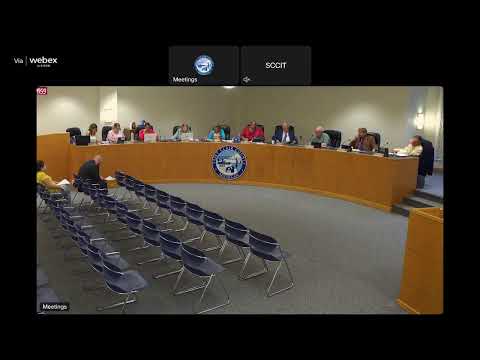
County committee backs exploring outpatient opioid treatment center using settlement funds
Summary
A St. Clair County Human Services Committee voted to forward a conceptual plan to the full county board to pursue a medication-assisted outpatient opioid treatment center, using opioid settlement money to cover start‑up costs. Committee members asked for a formal proposal and oversight terms before any award.
The Human Services Committee voted to forward a conceptual initiative to the full St. Clair County Board of Commissioners to pursue a community outpatient opioid treatment program funded with opioid settlement dollars.
The committee heard that the county’s Opioid Advisory Committee and a treatment subcommittee concluded there is no local medication‑assisted treatment (MAT) provider and that the gap is causing interrupted care for people released from jail. Tom Smith and county staff presented the committee’s work: the subcommittee ran an RFP process, interviewed vendors and recommended Comprehensive Treatment Centers (CTC) as a candidate to bring MAT (an opioid treatment program/OTP) into the county. Presenters said CTC has discussed locating an outpatient clinic and, as part of the concept, would provide a “warm handoff” from jail treatment into community care.
Why it matters: county leaders framed the proposal as a use of opioid settlement funds specifically authorized for MAT and related services. County staff reported there were roughly 416 overdose‑related EMS calls in 2024 and cited national fentanyl trends to underline unmet need. The committee emphasized the project would use settlement money for start‑up and short‑term operating support rather than fund an indefinite subsidy.
Key details presented: committee members were told the county expects about $13.5 million in opioid settlement revenue across multiple manufacturer settlements (delivered over differing schedules, some lump sums and some multi‑year streams). The vendor the subcommittee favored provided an initial conceptual ask of about $3.6 million to cover a building, capital and three years of operating support; presenters described that as a flexible starting point, not a finalized contract. CTC had not submitted a formal, final proposal as of the meeting.
Committee questions focused on scope, population served and oversight. Commissioners and staff clarified the clinic would serve adults in outpatient MAT (not juvenile residential treatment), would aim to coordinate with the jail’s existing medication program for continuity, and that any county funding would be structured on a reimbursement basis with performance reporting rather than an unconditional grant. Commissioners pressed for details on weaning/exit plans from medication modalities, program location and reporting lines; staff said such details would be part of a formal vendor proposal and recommended that CTC representatives be in any future presentation.
Action and next steps: the committee voted to forward the concept to the full Board of Commissioners for consideration and to direct staff to work with the vendor on a formal proposal that would include specific budget, oversight, reimbursement terms and measurable deliverables. Staff estimated they could return a refined proposal within approximately three months. The committee made clear any award would require a formal board action and would be drawn from opioid settlement (not general fund) monies.
Ending: The committee’s vote advances a process to try to establish local MAT capacity by using opioid settlement funding for start‑up support while keeping detailed contract and oversight terms to be decided by the full board.