
Marine Corps, Navy outline steps to restore amphibious capacity; lawmakers press for LSM procurement and maintenance focus
Get AI-powered insights, summaries, and transcripts
Subscribe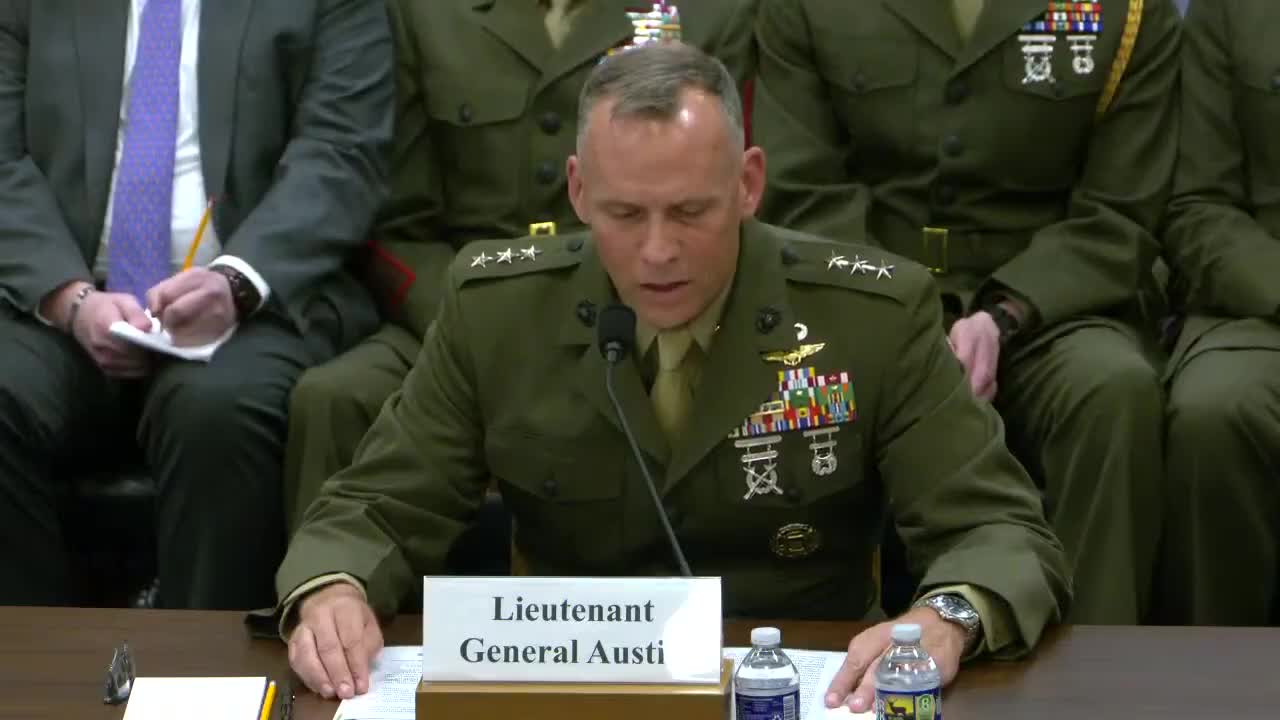
Summary
Marine Corps and Navy witnesses told the House subcommittee they are pursuing a three-tier plan for the Medium Landing Ship (LSM), a bridging strategy to fill gaps until LSM is fielded, and joint actions to restore amphibious ship readiness to support a continuous three Amphibious Ready Group/Marine Expeditionary Unit (ARG/MEU) presence.
Marine Corps and Navy witnesses told the House Armed Services Subcommittee on June 4 they are pursuing accelerated procurement and a bridging strategy for surface mobility while lawmakers urged a stronger maintenance and procurement approach to restore amphibious readiness.
Lieutenant General Austin, a Marine Corps witness, told the committee the force is “executing force design” and pressing to field a “medium landing ship” (LSM) capability that is “central to the success of our stand in forces.” He said the LSM Block 1 is on the verge of procurement as a non-developmental vessel and that the service is using fast transports, landing craft and commercial shipping as a bridging strategy until LSM is operational.
Why it matters: Several members emphasized the importance of a continuous three ARG/MEU presence as the Marine Corps’ “North Star.” Lawmakers said achieving that posture requires not only procuring new hulls but also improving amphibious ship maintenance and reducing availability timelines so ships can return to sea for training and deployment. Representative Rob Wittman and others told the services that a statutory inventory of amphibious ships (the committee discussed a 31-ship floor in law) may not be sufficient and that readiness assumptions must be explicit.
Witnesses described near-term actions. Austin said the LSM plan is a three-tiered approach: procure a non-developmental Block 1 item as authorized in the FY25 NDAA, experiment and refine future blocks, and use bridging logistics until production ramps. Admiral Pitts said Navy efforts include “signature availability pilots” that lock maintenance work packages earlier to give yards and maintenance teams time to prepare material and reduce time in maintenance.
Members asked how procurement pacing and maintenance investments will be reflected in the shipbuilding plan and the Navy’s Program Acquisition and Materiel (PAM) timelines. Witnesses committed to further analysis and to provide details for the record. Members repeatedly urged that maintenance be treated as a priority in planning documents (the “plan of record”/POA&M) so that amphibious availability and sustainment do not become a bottleneck to achieving a three-ARG/MEU persistent presence.
The hearing produced no immediate procurement awards; members and witnesses agreed on follow-up oversight and additional questions for the record on lifecycle costs, midlife extension options for existing amphibious hulls and the detailed timeline for LSM block buys.