
Army leaders: drones and counter‑UAS are central to transformation; committee urged to enable agile buys
Get AI-powered insights, summaries, and transcripts
Subscribe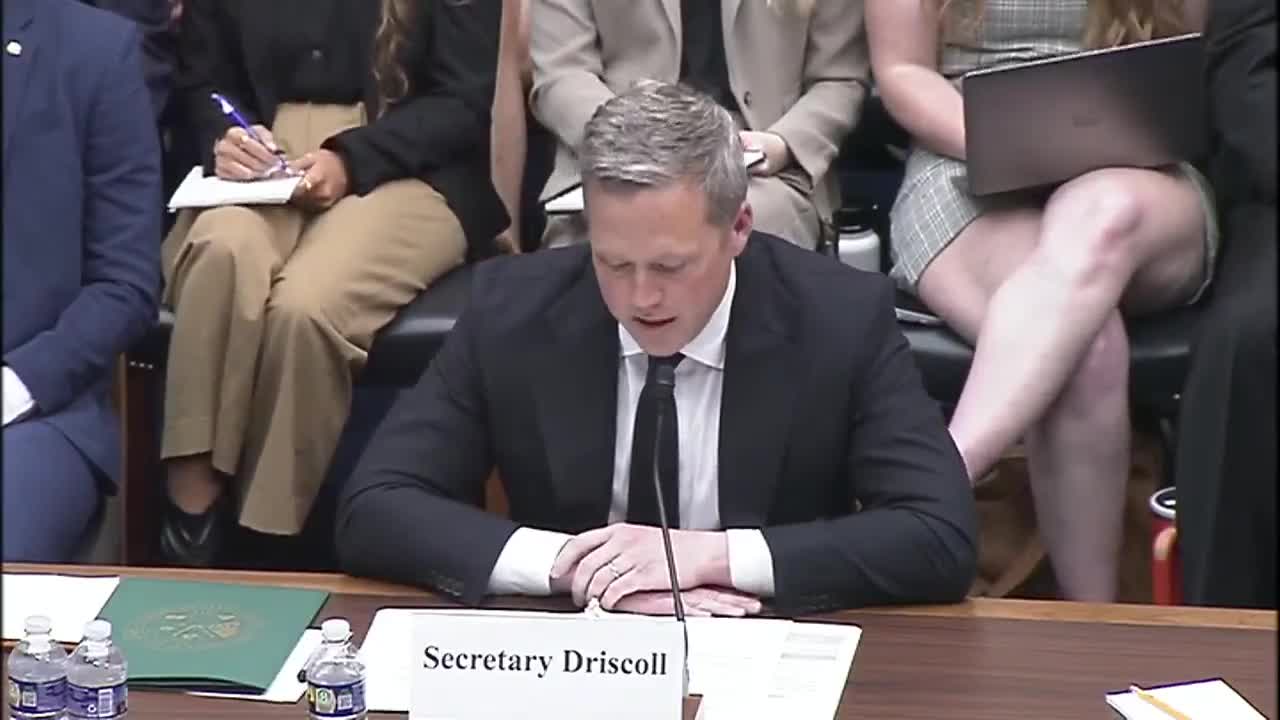
Summary
Witnesses told the House committee that lessons from Ukraine and recent tests show drones and counter‑UAS must scale rapidly; Army asked Congress for agile funding, authority to work with industry and help scaling domestic production.
Secretary Dan Driscoll and Gen. Randy George told lawmakers that cheap, commercial unmanned aerial systems (UAS) and swarms have reshaped battlefield economics and that the Army intends to prioritize scale and affordability for both offensive unmanned systems and counter‑UAS defenses.
Why it matters: The committee repeatedly referenced Ukraine’s recent use of inexpensive drones to strike high‑value targets and the need for both massed small UAS production and layered countermeasures in the U.S. force posture.
Driscoll’s testimony cited the example of a coordinated strike in Ukraine that used a “swarm of over 100 inexpensive drones” to damage Russian strategic bombers and said the event illustrated how “readily available technology can disrupt established power dynamics.” He and George argued this dynamic requires the Army to buy cheaper, attritable systems and to open acquisition pathways to nontraditional suppliers.
Gen. George described exercises and experiments in which formations used hundreds of UAS in training and emphasized the need for “agile funding” to buy across the cost curve: attritable, low‑cost expendable drones at one end and more capable systems at higher tiers. “We need to be, you know, be structured so that we're adopting certain equipment that we know the commercial sector is moving very fast,” Driscoll said, and asked Congress to authorize funding mechanisms that can keep pace with commercial development cycles.
Counter‑UAS and directed energy: Both leaders said counter‑UAS will be a “capability portfolio” including electronic warfare, high‑power microwave, lasers and kinetic options, and that cost tradeoffs must be considered to avoid shooting expensive interceptors at cheap drones. Gen. George called for testing and exercises that pair industry solutions and forward units; he pointed to large exercises in Europe and an upcoming flytrap event that will include industry partners.
Industrial base and surge: Committee members pressed whether U.S. industry can produce UAS at the scale seen abroad. Witnesses acknowledged the shortfall. Driscoll and George pointed to 3‑D printing, commercial component manufacturing, and expanded organic industrial base capacity as ways to increase U.S. output and noted earlier Department and Army investments to speed prototyping and low‑rate production.
What the Army asked for: statutory and budgetary flexibility (agile funding buckets), better access to commercial tech, clearer authorities for counter‑UAS operations in CONUS with coordination among NORTHCOM, FCC and FAA, and continued congressional support for experimentation and rapid procurement pilots.
Ending: Witnesses framed drone scale and counter‑UAS as a central near‑term priority for ATI and asked the committee to help craft procurement and statutory authorities that balance oversight and speed.