Get Full Government Meeting Transcripts, Videos, & Alerts Forever!
Get email alerts on the Budget Capital Program topic
No spam. Unsubscribe anytime.
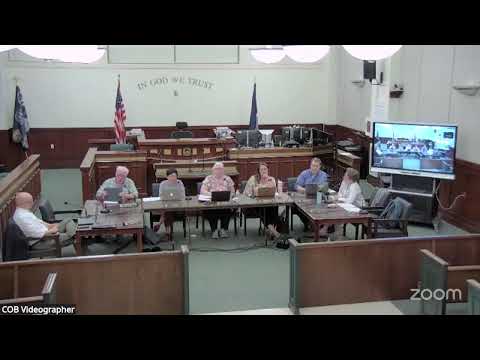
City presents $29 million five‑year capital program; staff to set public hearing
Summary
The city presented a draft five‑year capital program and a 2026 financing plan that together list about $29,075,874 of proposed work across the general, water and sewer funds.
The city presented a draft five‑year capital program and a 2026 financing plan that together list about $29,075,874 of proposed work across the general, water and sewer funds.
Susan Tucker, the city’s finance director, opened the presentation and described the capital program as “the budget plan that we use for non operating, non recurring items, such as equipment, vehicles, facility improvements, and other assets, investments in assets with a useful life of usually more than 5 years.” She told the council, “we are required to present the capital program by May 31, and then we will set a public hearing on June 2.”
Why it matters: the capital program sets multi‑year priorities that feed the operating budget and borrowing plans. Staff said 2026 is the only year with concrete financing numbers; 2027–2030 remain a conceptual phasing for planning and grant targeting.
Most important items and near‑term funding
- Fire department: Staff highlighted equipment and vehicle replacements and noted an increase in ladder truck pricing. City administrator Chris (last name not stated) said the ladder truck ordered to replace a 2015 vehicle rose “by almost $200,000. So that fire truck is now almost the cost of a building. It's 1,950,000.00.” The city plans to authorize the order now; delivery is expected in 2028 and will be paid on delivery. Staff also discussed ongoing self‑contained breathing apparatus (SCBA) replacements and grant applications for federal firefighter assistance.
- Streets and sidewalks: The draft includes recurring milling and paving (funded in part by CHIPS), an expected design phase for the Beekman Street pedestrian and bike project ($245,000 design in 2026 with a $3.8 million total project cost shown in later years), and a placeholder of roughly $250,000 annually for sidewalks. Staff said a preliminary federal grant award is expected in June; the local share was described as the 20% match under an 80/20 federal/state split.
- Parks and recreation: Staff proposed a $400,000 allocation for Memorial Park and related projects with recreation fees covering part of the cost. Proposed elements include basketball court repairs, new pickleball courts, restroom renovations, and potential skate‑park enhancements. Staff noted larger projects such as a community center or pool remain long‑term and would require additional funding.
- Water and sewer: Proposed water fund items include a $670,000 vacuum truck, a Mount Beacon water storage tank replacement (pending an easement from New York State Parks), and a $3.9 million rehabilitation of the Melzinga Dam (staff said they are pursuing a $2 million grant). On the sewer side, the wastewater treatment plant requires ongoing phased repairs (concentration tank refurbishing, aeration work and dewatering equipment) and collection system pump station replacements.
Financing plan and fiscal context
Susan Tucker presented a 2026 financing proposal that applies fund balance, short‑term borrowing and targeted grants. For 2026 staff proposed applying $1,083,092 of general‑fund balance, bonding about $588,000, and counting $998,000 in anticipated state and federal aid as contingent reductions if awarded; $200,000 of recreation trust funds were proposed for park projects. Tucker said the city ended 2024 with an unreserved general‑fund balance of $11.8 million and that applying the proposed amounts would leave a balance of roughly $9.7 million (about 37% of next year’s appropriations, she said), which is above the council’s 30% target.
Staff said they plan to issue short‑term bond anticipation notes rather than locking into long‑term debt immediately and that grant awards would reduce bonding or fund‑balance draws if they materialize.
Questions and follow‑up
Councilmembers pressed staff on grant assumptions, timing, and contingency plans if federal or state awards fail to materialize. Tucker said projects that depend on grants (for example, some Beekman work) would likely be deferred if grants do not come through; for other items staff said they would return to council to authorize alternate financing.
Staff also noted programmatic considerations: the water and sewer funds each maintain separate fund balances and the water fund carries relatively less debt capacity, while the wastewater plant has been rebuilt in pieces over multiple years.
What the council directed or decided
- Staff announced they will set a public hearing on the capital program for June 2 and target adoption of the capital program by July 31. Council did not take a final adoption vote at the workshop; the hearing and a future formal adoption remain next steps.
- Staff said they will provide more granular cost and grant‑matching details on request and can return with department staff for further questions at a subsequent workshop.
Ending note
Council members thanked department heads for preparing the plan and asked staff to circulate detailed backup for specific items prior to the public hearing so council and the public can review design and cost estimates.
Speakers quoted or referenced in this article are limited to those who appear in the meeting transcript and include Susan Tucker (Finance Director), Chris (city administrator), Ben (staff member assisting with materials), Mayor Lee (Mayor), Molly (Councilmember), Jeff (Councilmember), Amber (Councilmember), Paloma (Councilmember), George (Councilmember), Mark (parks staff), John Russo (city engineer), and Andrew Stevens (caretaker, Settlement Camp).