Get Full Government Meeting Transcripts, Videos, & Alerts Forever!
Get email alerts on the Legislative Intents topic
No spam. Unsubscribe anytime.
Council reviews wide legislative‑intent package: court workload evaluation, camera/privacy policy, traffic markings and alternative‑response review
Summary
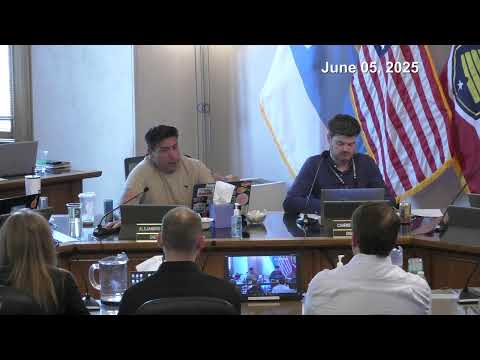
Salt Lake City council members used their June 5 work session to review a package of proposed legislative intents and interim study items that cover court workloads, police camera and drone privacy policies, traffic‑flow markings, and alternative‑response programs.
Salt Lake City council members used their June 5 work session to review a package of proposed legislative intents and interim study items that cover court workloads, police camera and drone privacy policies, traffic‑flow markings, and alternative‑response programs.
The council’s staff presented each proposed intent and the mayor’s or council committees’ suggested language; members debated timing and requested follow‑up briefings and revisions rather than taking final votes on most items.
Court workload and monthly case‑count reporting: The council asked the administration to report monthly on justice‑court and related caseloads to help decide whether budget adjustments are needed sooner than a full system evaluation. Allison Rowland, council staff, summarized options and members sought a six‑month target and a monthly dashboard item to keep the issue visible.
Police camera, body‑worn camera and drone privacy: Council members asked for an annual written report and the option for small‑group meetings to discuss operational and policy issues including privacy, transparency and civil‑rights implications. One council member pressed for clearer attention to how drone operations on the Jordan River Trail and other city operations would be handled in a citywide policy.
Traffic markings and “don’t block the box”: Members discussed whether the city can adopt clearer markings, signage or public‑education efforts to reduce blocking of intersections; staff noted state traffic law is the controlling authority and recommended an administrative evaluation of options, including paint and signage, and whether local ordinance changes would be required.
Alternative/diversified response teams: Council members merged several previous intents into a single request to evaluate the city’s diversified response teams. Members asked the administration for a series of briefings — an orientation, follow‑up deep dives and a wrap‑up — so council decisions about funding and metrics can inform the next budget cycle. One council member proposed that the council not automatically re‑fund alternative‑response contracts without metrics, though others said such metrics may take time or not be uniformly available; council staff and administration agreed to schedule briefings in the first quarter of the fiscal year and to return with options for measurement.
Other items: The council also reviewed a proposed CIP set‑aside for community‑led projects, support for additional outreach to promote the MySLC constituent app, and a collaborative review with the administration and the Arts Council to outline funding, outcomes and priorities. In one late addition, council staff and administration agreed to compile an inventory of city services and programs — distinguishing core versus noncore services — to inform future budget choices.
How the council proceeded: For many of the items council members conducted informal straw polls indicating support for the staff‑draft language with small edits; staff will circulate refined language and schedule briefings for the items that require more analysis. A number of the intents carried unanimous or near‑unanimous straw polls with some members absent, while others were tabled for further edits.
What was not decided: These work session votes were procedural or advisory; the council did not adopt final ordinances or allocate funding on the items presented. Members emphasized they expect further staff work, public outreach, and targeted briefings to inform any formal actions.