Get Full Government Meeting Transcripts, Videos, & Alerts Forever!
Get email alerts on the Public Safety Dispatch topic
No spam. Unsubscribe anytime.
Salt Lake City Council reviews FY26 9‑1‑1 budget, department proposes AI triage for nonemergency calls
Summary
Salt Lake City’s 9‑1‑1 communications bureau sought a small general‑fund increase and proposed a $325,888 ongoing e‑9‑1‑1 fund contract for AI call triage to reroute nonemergency calls, while council members pressed for staffing, training and public‑education details.
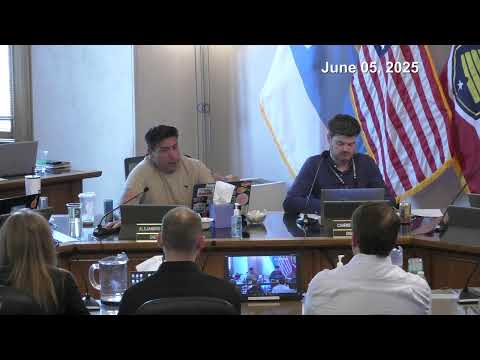
Salt Lake City’s 9‑1‑1 Communications Bureau presented its FY26 budget request to the City Council on June 5, asking for a 0.71% increase in general‑fund support and proposing a new $325,888 ongoing expenditure from the city’s e‑9‑1‑1 fund to purchase an AI call‑triage application.
The proposal would keep the department at 100 authorized employees — 81 frontline dispatchers — while the department reported 15 dispatcher vacancies. “Out of the 650 plus thousand calls that we receive, a little under 200,000 of those are actually 9‑1‑1,” Lisa Kehoe, 9‑1‑1 dispatch director, told council members, illustrating the volume of nonemergency calls the AI tool is intended to address.
Why it matters: Council members said they want the city to expand capacity and maintain emergency reliability without shifting callers who need human assistance. The 9‑1‑1 division told the council the e‑9‑1‑1 fund would support ongoing software costs and that the department expects a FY26 ending balance of about $5.2 million in the e‑9‑1‑1 fund; staff said a healthy balance is roughly $3 million.
The budget details: Department staff said the proposed general‑fund increase — about $82,000 — is driven by standard personnel costs, including a proposed 4% cost‑of‑living adjustment and employer benefit contributions. The FY26 budget includes planned uses of roughly $9,000,000 from the e‑9‑1‑1 fund and a proposed initial one‑time cost for the vendor (about $343,888) in addition to the ongoing $325,888 fee, the department said.
AI proposal and safeguards: Kehoe said the vendor the department is considering also provides the city’s computer‑aided dispatch system and that similar implementations in other jurisdictions have reduced nonemergency call volumes by about 30%. “One of the things that we noticed with some of these, when we program it, we set up the time frame so that, you know, if a person calls in, I just wanna talk to a person. That’s okay. Not only does it allow an opportunity to, 1, ask for a human being, it will automatically give them go right back to the old fashioned way and go talk to a person,” she said. Kehoe also emphasized built‑in fallbacks: if a caller does not respond or if stress or other cues are detected, the system would re‑route the call to a human dispatcher.
Translation and records: Kehoe told the council the vendor’s platform supports automatic translation and transcription for many languages and detects dialects, which the department said would reduce delays when arranging live translators and improve documentation of calls. “This also provides the opportunity for us to tag in that AI assistant to not only assist with translating the language but transcription,” Kehoe said.
Council questions and next steps: Council members asked about public reaction, pedestrian options for callers who prefer a human voice, pilot timing and how the tool would interact with text‑to‑9‑1‑1. Kehoe said the system can be deployed selectively during high‑volume periods and tested in a sandbox, and that some vendors can attach translation to text‑to‑9‑1‑1 services. Council members also asked the department to share data on texting volumes and follow up on staffing and training improvements the department reported.
Staffing and training: Kehoe described a reworked training program that uses certified trainers and more on‑the‑job coaching; she said recent classes have had higher completion rates, and staff reported trainees are being released to the floor earlier and better prepared. The department said it currently sits at about the national average for staffing levels.
What was not decided: Council members asked for follow‑up data — including test results from any pilot, more precise cost estimates, and public‑education plans — before taking final action on the AI purchase. The discussion did not include a formal motion or vote on the AI purchase; council members instead used the work session for questions and to ask staff for additional details.
Background: Revenues credited to the city’s e‑9‑1‑1 fund are generated by an excise tax on cellular phone bills; the fund has financed dispatch technology and equipment in prior years. The department said reliance on e‑9‑1‑1 fund balance to support ongoing costs would need review to keep the fund at a healthy level.