
Witnesses and lawmakers tell committee tariff uncertainty is discouraging investment in U.S. manufacturing
Get AI-powered insights, summaries, and transcripts
Subscribe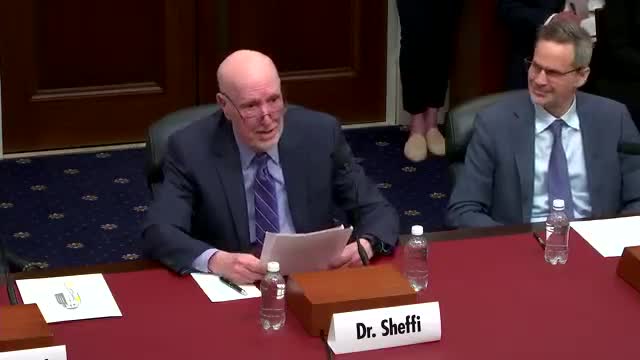
Summary
Multiple witnesses said unpredictable and volatile tariff policy is deterring private investment and inventory decisions, adding to supply‑chain uncertainty that can stall hiring and capital spending.
Washington — At a Joint Economic Committee hearing focused on strengthening U.S. manufacturing and supply chains, witnesses and members repeatedly cited tariff uncertainty as a major deterrent to private investment.
Yossi Sheffey of MIT told the committee, “It’s the uncertainty that’s killing us, killing companies,” describing how rapid or unpredictable tariff changes lead firms to hold excess inventory, delay investments and pause hiring.
Dr. Sujay Shivakumar of the Center for Strategic and International Studies told the committee that while tariffs can be useful to address unfair trade practices, “a tariff‑only strategy that does not address the workforce development and infrastructure build‑out and regulatory relief for renewing U.S. manufacturing will not be effective.” He added that high or volatile tariffs can introduce uncertainty that discourages private investment and prompt firms to develop alternate supply chains that bypass the United States.
Why it matters: multiple lawmakers and witnesses said tariff volatility — including sizeable recent increases in applied rates — creates short‑term shocks in imports and retail hiring and raises the cost of inputs for U.S. manufacturers. Committee members asked witnesses whether tariff policy should be combined with investment in workforce and infrastructure to be effective.
Witnesses and lawmakers asked for follow‑up data on trade flows, tariff incidence and the impact of tariff changes on specific sectors. They also urged clearer, more predictable trade policy as part of a broader industrial strategy that couples trade tools with workforce, infrastructure and regulatory reforms.
Ending: The committee signaled plans to review data on tariff impacts alongside studies of permitting and workforce initiatives to craft coordinated legislative responses.