
Witnesses tell Joint Economic Committee U.S. must rebuild manufacturing capacity with skilled workers and faster permitting
Get AI-powered insights, summaries, and transcripts
Subscribe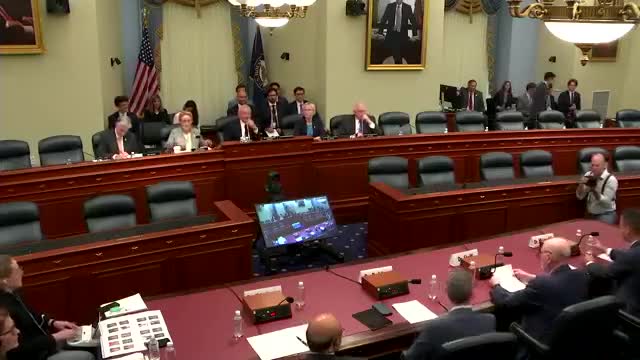
Summary
Experts told the Joint Economic Committee that restoring U.S. manufacturing requires dovetailing federal incentives such as the CHIPS and Science Act with workforce training, infrastructure upgrades and swifter regulatory reviews to avoid multi‑year delays.
Washington — Experts testifying before the Joint Economic Committee on manufacturing policy on Thursday told members that federal incentives and state and local partnerships are boosting plans to bring critical plants to the United States, but that workforce shortages and slow permitting could hobble those investments.
The core challenge, Dr. Sujay Shivakumar, director of Renewing American Innovation at the Center for Strategic and International Studies, told the committee, is reconnecting research and production: “We need to move manufacturing and the infrastructure that supports manufacturing back into the center of our strategy.” He added that federal, state and local governments must coordinate on workforce, infrastructure and regulation.
Why it matters: several witnesses said the CHIPS and Science Act and the Inflation Reduction Act are already driving investment in semiconductor fabs and other advanced manufacturing projects — but that permitting delays and mismatches between firm needs and training programs threaten to delay or raise the cost of those projects.
Shivakumar said roughly “95% of the CHIPS Act’s incentive supports semiconductor fabrication,” and that construction timelines for new fabs are being extended by permitting processes. “Permitting delays can stretch for years,” he said, and cited industry estimates that environmental reviews such as those under the National Environmental Policy Act (NEPA) can add “4 to 5 years” to some projects.
Witnesses pushed three near‑term policy priorities: 1) align federal incentives with state and local workforce training and infrastructure funding, 2) modernize permitting and regulatory processes to give investors predictable, expedited timelines while preserving environmental safeguards, and 3) expand vocational and technical education to supply the technicians, operators and maintenance workers who will run high‑tech plants.
Yossi Sheffey, a professor at MIT and director of the MIT Center for Transportation Logistics, emphasized skill shortages. “One of the main challenges in reshoring is the lack of manpower,” Sheffey said, arguing for greater investment in trade schools and apprenticeships for positions such as CNC operators, electricians and robot technicians.
Committee members and witnesses also debated trade tools. Shivakumar said a “tariff‑only strategy that does not address the workforce development and infrastructure build‑out and regulatory relief … will not be effective,” adding that volatile tariffs introduce uncertainty that can deter private investment.
The hearing included multiple requests for follow‑up data and site visits. Witnesses urged lawmakers to couple incentive programs with clearer timelines for environmental reviews and with explicit workforce commitments from industry and states.
Looking ahead: witnesses framed the task as urgent because of both national security concerns and the pace of technological change. They recommended that Congress consider targeted statutory changes to speed predictable environmental review for major, federally‑incentivized projects, paired with funding to expand apprenticeships and community college programs that map directly to employer needs.