Citizen Portal

Members spar over 10-year state moratorium on AI and $500 million Commerce funding in reconciliation language

3682732 · June 5, 2025

Get AI-powered insights, summaries, and transcripts

Subscribe
AI-Generated Content: All content on this page was generated by AI to highlight key points from the meeting. For complete details and context, we recommend watching the full video. so we can fix them.

Summary

Committee members and witnesses debated a provision in reconciliation legislation that would bar states from enforcing AI-specific laws for 10 years while authorizing $500 million for Commerce Department modernization. Witnesses and lawmakers expressed confusion over scope and raised concerns about federalism and contract beneficiaries.

WASHINGTON — Lawmakers on the House Oversight and Reform Committee pressed witnesses and one another on a controversial provision in recently circulated reconciliation language that would restrain state and local regulation of artificial intelligence, and on a related $500 million Commerce Department request that some members said lacked clear detail.

Representative Higgins questioned witnesses about language described as a 10-year moratorium that would prevent states or political subdivisions from enforcing AI-specific laws during that period. Adam Thier and other witnesses described the policy as intended to protect interstate commerce and avoid a patchwork of state rules that could impede federal modernization and national competitiveness.

Thier told the committee the provision is meant to preserve a national framework for AI and to prevent parochial state regulation from fragmenting markets. He said there are exceptions in the text for laws of general applicability and criminal enforcement, and that the proposal "reflects the broader consensus of Congress going back over the last 30 years about the Internet and technology" and the need for a national marketplace.

But several members pushed back. Representative Tansbury and Representative Norton pressed witnesses for specifics, asking who proposed the $500 million Commerce modernization funding and which contractors might benefit. Witnesses, including Thier, replied they did not have exact procurement plans and suggested the funds would support modernization efforts at the Department of Commerce. Thier told the panel he could not identify specific vendors or exactly how Commerce would spend the money.

Why it matters: The provision would centrally limit state authority over AI regulation for a decade at a time when states are actively considering their own guardrails. Opponents argued that the language would undermine state police powers, prevent locally tailored protections and shield private contractors from state oversight. Supporters said a consistent national framework is necessary to maintain an interstate market for AI products and to enable federal modernization projects.

Key exchanges and clarifications

- What the text would do: Witnesses described the moratorium as preventing enforcement (not necessarily preventing states from debating or passing laws) during the 10-year period. Thier explained the intention was to avoid a patchwork that would complicate federal implementation.

- Exceptions and limits: According to testimony, the moratorium would not apply to laws of general applicability (for example, criminal statutes), and would include carve-outs for certain state actions. The witnesses emphasized the language targets AI-specific regulations, not all state laws.

- $500 million Commerce request: Several members — including Rep. Tansbury — said they could not trace the appropriation request to specific projects or vendors and asked whether large contractors such as Palantir would be the likely beneficiaries. Witnesses said they did not have a specific vendor list and that funds would likely support a range of modernization activities.

- Political and practical concerns: Members warned that sweeping preemption of state action for 10 years could remove a layer of local protection and reduce states' ability to pilot regulatory approaches. Others said that national rules could help U.S. competitiveness against foreign rivals that coordinate AI deployment at scale.

What—s next: The contested language appears in broader reconciliation text moving through Congress; if the Senate alters the text, the House would have an opportunity to vote on the final package. Members on both sides said they would press for clarifications or amendments in later stages of the process.

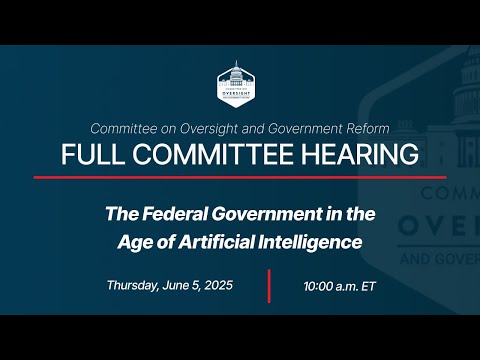
Context: The exchange came as the committee held a broader hearing on the federal government's use of AI. Many witnesses emphasized the need for modernization, pilot programs and workforce training while cautioning that security, privacy and federalism implications must be addressed.

The committee did not take a formal vote on the reconciliation provision during the hearing.