Get Full Government Meeting Transcripts, Videos, & Alerts Forever!
Get email alerts on the Ngos Migration topic
No spam. Unsubscribe anytime.
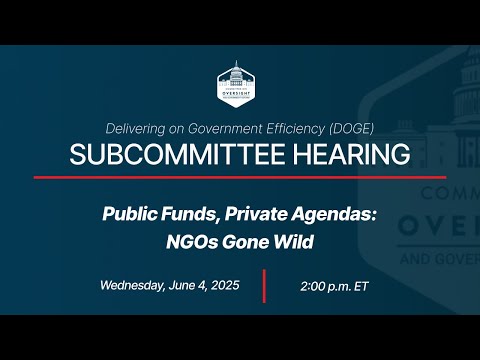
Witnesses tell House panel U.S.-funded NGOs and U.N. programs helped migrants traverse Latin America; some testimony hedges on direct criminal collusion
Summary
Mark Krikorian of the Center for Immigration Studies told a House Oversight subcommittee that U.S. taxpayer funding channeled through U.N. agencies and nongovernmental organizations helped create a chain of "way stations" enabling migrants to move from South America toward the U.S. border.
Mark Krikorian, executive director of the Center for Immigration Studies, told the House Oversight subcommittee that U.S. taxpayer funding flowed through a network of U.N. agencies and nongovernmental organizations that created a logistics corridor enabling migrants to travel from South America through Central America to the U.S. border.
Krikorian described that network as a "Regional Refugee and Migrant Response Plan" in which NGOs and some U.N. agencies provided food, shelter, travel information and other assistance at multiple staging points along irregular migration routes. He told the panel that the arrangement included "way stations" in northwestern Colombia such as Necoclí, services near the Gulf of Urabá and camps in southern Mexico near Tapachula.
Why it matters: Committee Republicans cited the accounts as evidence that U.S. foreign assistance funded services that had the practical effect of facilitating irregular migration. That claim, if supported by documentary evidence, would bear on how foreign-assistance and migration-related programs are designed and overseen.
What witnesses said and qualified
- "This network consisted of way stations all along Latin American illegal migration routes that made it possible for millions of foreign nationals from as many as 80 countries to illegally get to the U.S. border," Mark Krikorian testified. He said some funding came directly from the State Department's Bureau of Population, Refugees, and Migration and USAID, and some came indirectly through U.S. funding of U.N. agencies that then funded NGOs.
- Kricorian described on-the-ground reporting in Necoclí and other staging areas and said the Center documented interactions between humanitarian actors and local criminal groups in some cases. He said in Colombia "the camp...where the security for the camp was provided by this drug smuggling gang," though he acknowledged, "We don't have evidence of this, but it seems likely to me that NGOs and the UN paid for the security." He explicitly declined to assert direct payment evidence in that example.
- Kricorian also said U.N.-funded programs included what he described as a cash-and-voucher program that distributed prepaid debit cards and cash to migrants; in his testimony he cited an example he described as "a $372,000,000 program" used by 624,000 migrants to move through transit countries.
Cross-examination and committee context
- Committee members pressed witnesses about the scale and intent of the programs, and whether services described were humanitarian aid or operational assistance that undermined migration enforcement. Kricorian said some of the activities might have been presented as humanitarian assistance but that at scale they reduced the practical barriers to continuing long-distance journeys.
- Several committee members said more oversight is needed and that Congress should condition or restrict funding to recipients that facilitate irregular migration. Witnesses urged document production and further inquiry from agencies and U.N. partners. No formal enforcement actions were recorded at the hearing.
Limits and caveats in testimony
- Kricorian included both firm observations and hedged statements. For instance, he repeatedly distinguished between what his team documented and what he characterized as plausible inference ("it seems likely"). He noted where he lacked direct documentary evidence tying NGO payments to criminal groups.
- Nonprofit witnesses at the hearing argued that many organizations provide lifesaving humanitarian assistance and that curtailing funding without firm evidence could endanger people in transit and local civilians who rely on aid.
Ending: The subcommittee signaled it will pursue further document requests and oversight of foreign-assistance and U.N.-partnered programs used for migration-related aid; witnesses said additional field reporting and accounting records are needed to substantiate some of the committee’s most serious allegations.