Get Full Government Meeting Transcripts, Videos, & Alerts Forever!
Get email alerts on the Recycling And Solid Waste topic
No spam. Unsubscribe anytime.
Swansea transfer station staff outline recycling pilot, facility upgrades and equipment needs
Summary
Town staff reported progress on recycling pilots, staffing and several planned facility upgrades including a waste-oil building, a second skid-steer and a glass bunker rebuild; staff also described certification work for wastewater operators and a phosphorus-removal pilot test.
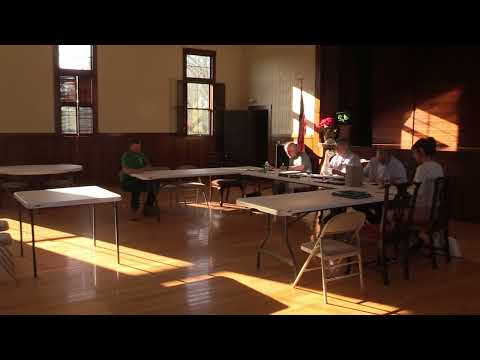
Staff at the town transfer station gave the Board of Selectmen a detailed update on recycling operations, pilot programs and planned capital work, saying the town is testing new collection streams and preparing grant applications and an equipment RFP.
The presentation, given during the selectmen’s meeting, covered a pilot for plastics labeled 3–7, compost and brush handling, a phosphorus-removal pilot test at the wastewater plant, a planned waste-oil building replacement with associated grant applications, and a request to procure a second skid-steer to provide operational redundancy.
Staff said the 3–7 plastics pilot began in February and is currently averaging “about a bin every week and a half” at roughly 60–70 pounds per bin; the town is waiting to produce a first bale before wider public rollout. “We started it in February, and we’re averaging about a bin every week and a half,” the staff member said. The presenter said contamination (wrong plastics mixing in) is the primary challenge and that the town is exploring bale storage and scheduling to avoid interfering with existing compactors.
On equipment, staff described plans for an RFP for a second skid-steer with a rock bucket (greater utility for brush and compost) and said a purchase could be subsidized with a $5,000 grant the presenter called out. The presenter gave a rough price range for a new machine around $60,000–$61,000 before municipal discounts and trade-in considerations and said buying a second machine would reduce rental costs and wear on the existing unit.
The presenter also reported on operations and certification: several staff are pursuing wastewater operator certifications. The presenter said they have completed most of the required training hours and that state staff have visited the plant for on‑site review. On a separate chemistry pilot, staff sat in on composite jar testing with Underwood Engineers to evaluate phosphorus removal, and expectation was that the program would start in the coming weeks.
Planned facility projects discussed included rebuilding the glass bunker (to expand storage capacity ahead of scheduled shipments to a Canadian vendor), constructing a new waste-oil building (the presenter noted the town may seek up to $2,000 from the waste-oil grant program), and minor site repairs: front gate roller bearings, fence repairs and signage updates. Staff said they were also organizing storage and sorting layouts to reduce noise in the building and to create dedicated windows for glass and specific plastics streams.
On revenue, staff reported material market movement and inventories ready to ship: “we’ve got probably close to 2 loads of aluminum. It’s at roughly 78¢ a pound,” the presenter said, and estimated fiscal-year recycling revenue approaching $65,000 compared with $58,000 last year, though the presenter framed that as an estimate pending forthcoming shipments. The department’s diversion rate was reported as 32.75 percent.
No formal appropriation or vote to purchase equipment was recorded in the meeting transcript; staff described ongoing planning, grant applications and an intent to return with formal RFPs and budget requests. The selectmen and other board members asked operational questions and offered items such as potential donated windows and volunteer help; staff confirmed they would follow up on grant applications, planning-board steps and RFP detail.
The transfer station presentation concluded with staff saying the program is still being refined and that a full public rollout of the 3–7 plastics pilot would follow the first completed bale and decisions about storage and processing logistics.