
Committee reviews Chapter 10 draft of comprehensive plan and receives McDevco and UW reports
Get AI-powered insights, summaries, and transcripts
Subscribe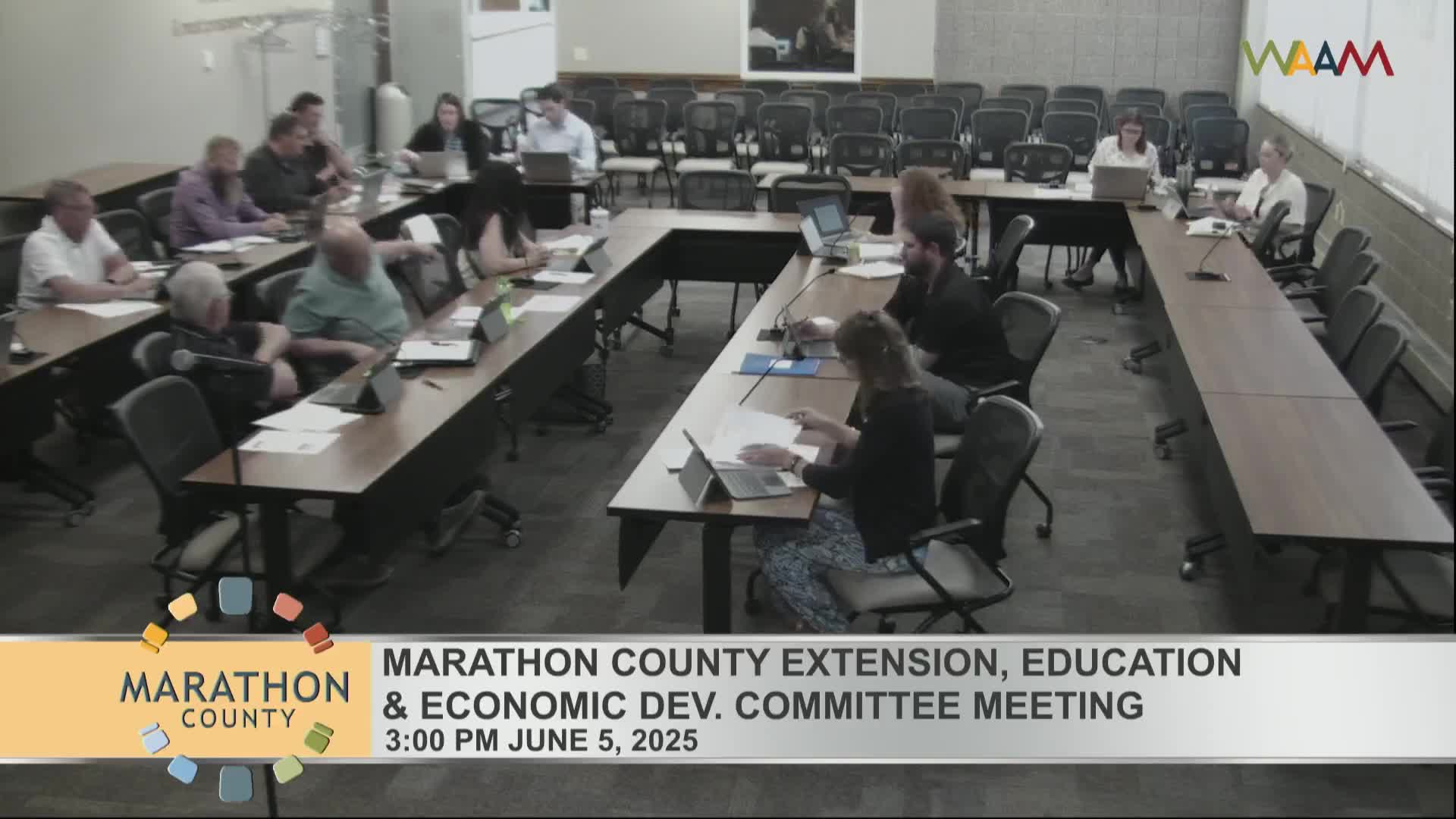
Summary
Committee members reviewed a working draft of Chapter 10 (education, workforce and economic development) of the Marathon County comprehensive plan and received monthly updates from McDevco, UW Wausau and UW Extension, including concerns about SNAP-Ed funding and local economic development data updates.
Committee members reviewed a working draft of Chapter 10 of Marathon County’s comprehensive plan (education, workforce development and economic development) and received routine monthly reports from McDevco and UW Extension.
Comprehensive plan update: Laurie Kimmons presented the initial working draft for Chapter 10 and said staff had incorporated 2020 data and several studies, noted missing entries and intended updates. The draft includes three separate goals—education, workforce development and economic development—and placeholders for a childcare section. Christian from the regional planning commission explained location quotient projections showing concentrated and growing industries by 2035 and said location quotient is a tool to identify sectors the region is comparatively strong in and to inform economic targeting.
Committee members requested updates and corrections: Supervisor Marshall asked for wording that avoids implying the county can “ensure” workforce availability; staff agreed to change that to “support.” Members also asked to add Marathon County to a table of large employers and to double-check UW Stevens Point enrollment figures and school district consolidation notes.
McDevco report: McDevco staff summarized business incubation, financing and revolving loan activity. Highlights included administering multiple revolving loan funds on behalf of the county and partners, disbursing about $657,000 in loans this year, and near-exhaustion of Marathon County’s $1 million chunk of the county revolving loan fund (the program continues with other committed funds). The Wausau Business Incubator is about 82% occupied (up from roughly 60% in early 2021), with increased demand in manufacturing suites and a commercial incubator kitchen nearing capacity.
UW Wausau and Extension updates: Miranda Gentry Siegel, incoming Wausau campus executive, reported student registration and Upward Bound programming (34 students enrolled). UW Extension staff highlighted the FoodWIse (SNAP-Ed) program and noted that federal SNAP-Ed funding was not included in recent House agriculture bill language; statewide SNAP-Ed funding is roughly $7.6 million, staff said, and local educators said they would welcome support and advocacy. Extension also noted summer programs such as 4-H camp and horticulture outreach.
Next steps: Staff will update the Chapter 10 draft with requested corrections, seek more recent data where appropriate, and return to the committee for further review. McDevco requested continued referrals of small-business clients for loans and incubation services.