Get Full Government Meeting Transcripts, Videos, & Alerts Forever!
Get email alerts on the Impact Fees topic
No spam. Unsubscribe anytime.
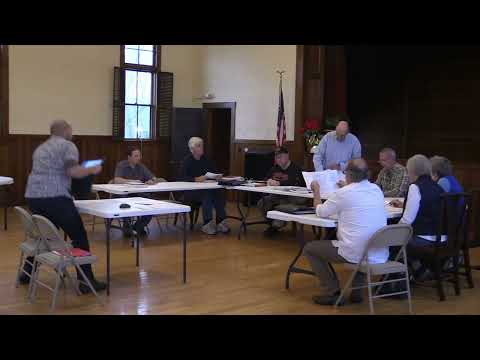
Swansea board weighs one-time impact fees to help fund roads, schools and water projects
Summary
Members discussed adopting an impact-fee framework to pay for infrastructure tied to new development, reviewed example fee schedules and agreed to ask staff for data and a model spreadsheet before the next meeting.
Swansea board members discussed whether to adopt a one-time impact-fee ordinance to fund capital needs tied to new development, but made no formal vote and instead directed staff to compile data for a future decision.
The board considered a packaged impact-fee proposal and an example fee schedule provided by planning staff. Board members raised the trade-offs of charging developers a one-time fee — which can fund roads, water system upgrades and equipment for police and fire — against the risk that high fees could discourage business and housing development.
Planning staff (Adam) presented example calculations from an outside schedule: under that schedule, a 2,500-square-foot single-family house at $5.18 per square foot would generate $12,950 in fees, while an 80-unit apartment project with 600-square-foot units at $4.78 per square foot would produce about $229,440. Staff and board members noted these are examples only and that Swansea would set its own rates if the town adopts an ordinance.
Board members emphasized several design features they want considered if the town moves forward: tying fees to clearly identified capital projects; keeping fee levels low enough not to deter desirable business or modest housing; allowing limited waivers or phased payment schedules for hardship or economic-development cases; and strict accounting so fee revenues are held in separate accounts and used only for their stated purposes. Members noted state/local rules limit when impact fees may be used and that fees must be tracked and expended within a statutory timeframe (discussed in the meeting as up to six years with interest under the proposed framework).
Several members urged caution about administrative costs and staffing to manage fee accounts. The board asked staff to prepare a spreadsheet showing recent building permit activity, annual counts and total square footage (residential and nonresidential) and to model several fee schedules so members can see projected receipts and likely costs. The board agreed to reconvene the discussion at a meeting scheduled for June 12 to review that data.
No ordinance was adopted and no formal votes were recorded during the discussion. The board’s next steps are to receive staff’s data and draft accounting procedures and then determine whether to draft a local ordinance or other formal impact-fee mechanism for public review.