Get Full Government Meeting Transcripts, Videos, & Alerts Forever!
Get email alerts on the Land Use Solar topic
No spam. Unsubscribe anytime.
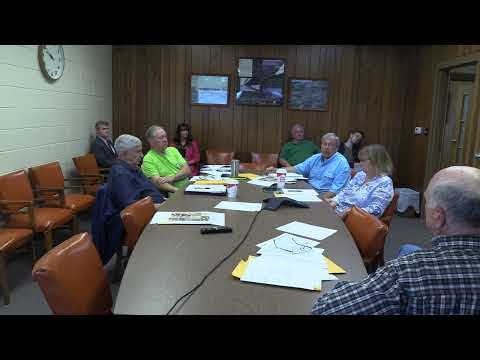
Edgar County board reviews draft solar ordinance with $20,000 base fee and up to $250,000 cap
Summary
County board members reviewed a draft solar‑farm ordinance that adds LaSalle‑Saint Clair review factors, introduces a two‑step application/building‑permit process and sets a base application fee with a $250,000 maximum permit cap.
Edgar County board members reviewed a draft ordinance to regulate utility‑scale solar installations that would create a two‑step permitting process, set application fees and add a set of discretionary review factors to the county code.
The draft ordinance discussed by the board would require an initial application followed by a separate building permit. The application fee structure includes a $20,000 base fee for a 4‑megawatt project, with fees rising for larger projects and a stated maximum permit fee of $250,000. Board members also discussed a suggested building‑permit fee “in the neighborhood of” $100,000 for larger projects; the transcript indicates the exact schedule for building permits is set out on a subsequent page of the draft and will be finalized with the ordinance.
Board members considered whether to retain language adopting the LaSalle‑Saint Clair factors, a set of discretionary criteria that would allow subjective review of proposed installations. According to the discussion, inclusion of those factors would require applicants to satisfy a list of considerations the county could weigh in deciding whether to approve or condition a project. One participant cautioned that adding those factors “would make them go through some extra steps” and that, if the board rejected a specific factor after the hearing, “it could be pulled out.” The county attorney also warned that adding subjective factors can increase the chance of a legal challenge.
The draft includes a post‑application checklist and tighter language to clarify the role of the zoning administrator and to enumerate the actions required before construction may begin. Andy, who provided the checklist and related materials to the board, said the item of greatest interest to solar developers was “having a cap on the application fee.” The board also discussed publishing the required public‑hearing notice this week and holding the hearing at a study session in advance of the June county board meeting to avoid scheduling multiple special meetings.
No ordinance vote occurred. The board instructed staff and counsel to prepare public‑notice materials and to circulate a Word version of the draft so staff can make targeted edits between the notice and the hearing. Members said the LaSalle‑Saint Clair factors could be removed at the hearing if the board agreed, but they kept the factors in the draft to preserve options for discussion during the public hearing.
If approved, the ordinance would change the county’s solar permitting approach by making application review more explicit and by charging higher initial fees intended to cover staff review and inspection costs.