Get Full Government Meeting Transcripts, Videos, & Alerts Forever!
Get email alerts on the Arts Photography topic
No spam. Unsubscribe anytime.
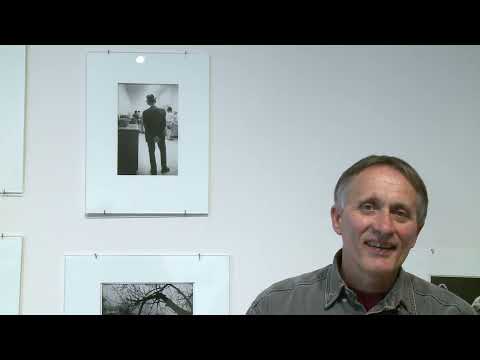
Photographer David Spear Reflects on Waiting and Memory in "Waiting for the Bridal"
Summary
Photographer David Spear discussed the origins, composition and themes of his photograph "Waiting for the Bridal," describing the laundromat scene, the subject's body language and the image's connections to memory and focus.
David Spear, photographer, described the origin and meaning of his photograph "Waiting for the Bridal," saying he first noticed the scene through a laundromat window in San Francisco and returned to make the image after the figure remained in the same position. "The photograph here is entitled Waiting for the Bridal," he said, explaining the decision to shoot from outside the glass.
Spear said the picture, which shows a single person in a laundromat, explores the idea of waiting in everyday life. "That idea of waiting, I think, is something in our culture that's that we're become familiar with," he said, citing lines at movies, doctor’s offices and other routine places as parallel experiences. He described the subject's posture as "almost draped" and the scene as simultaneously lonely and comfortable.
The photographer also discussed technical and interpretive choices: the foreground subject is in focus while background figures are out of focus, which he said creates a "dream aspect" and allows viewers to imagine what lies beyond the frame. "So, there are 2 aspects to that photograph I think that for me are about the sharpness of reality and in some ways about the out of focus of how I might imagine something to be," Spear said.
Spear connected the image to his personal memory, noting that after making the photograph he moved to New York and often did laundry at laundromats. He said details such as "the smell of detergent" and the gestures of handling coins and machines informed his recollection and the way he reads the photograph.
On process, Spear said he made a single photograph and chose to keep the subject in that setting. "I just made that 1 photograph and then decided for that moment that I wanted to leave that person in that setting in the way it was," he said, adding that another photographer might have reacted differently.
The talk concluded with Spear noting the tension between capturing a moment and the unanswered questions a photograph can pose about a subject’s interior life — whether the person is patient, sad or content — and the viewer’s impulse to imagine those possibilities.