
Mayor O’Connell endorses unified housing strategy and urges local partnerships; discusses encampments, vouchers and tenant protections
Get AI-powered insights, summaries, and transcripts
Subscribe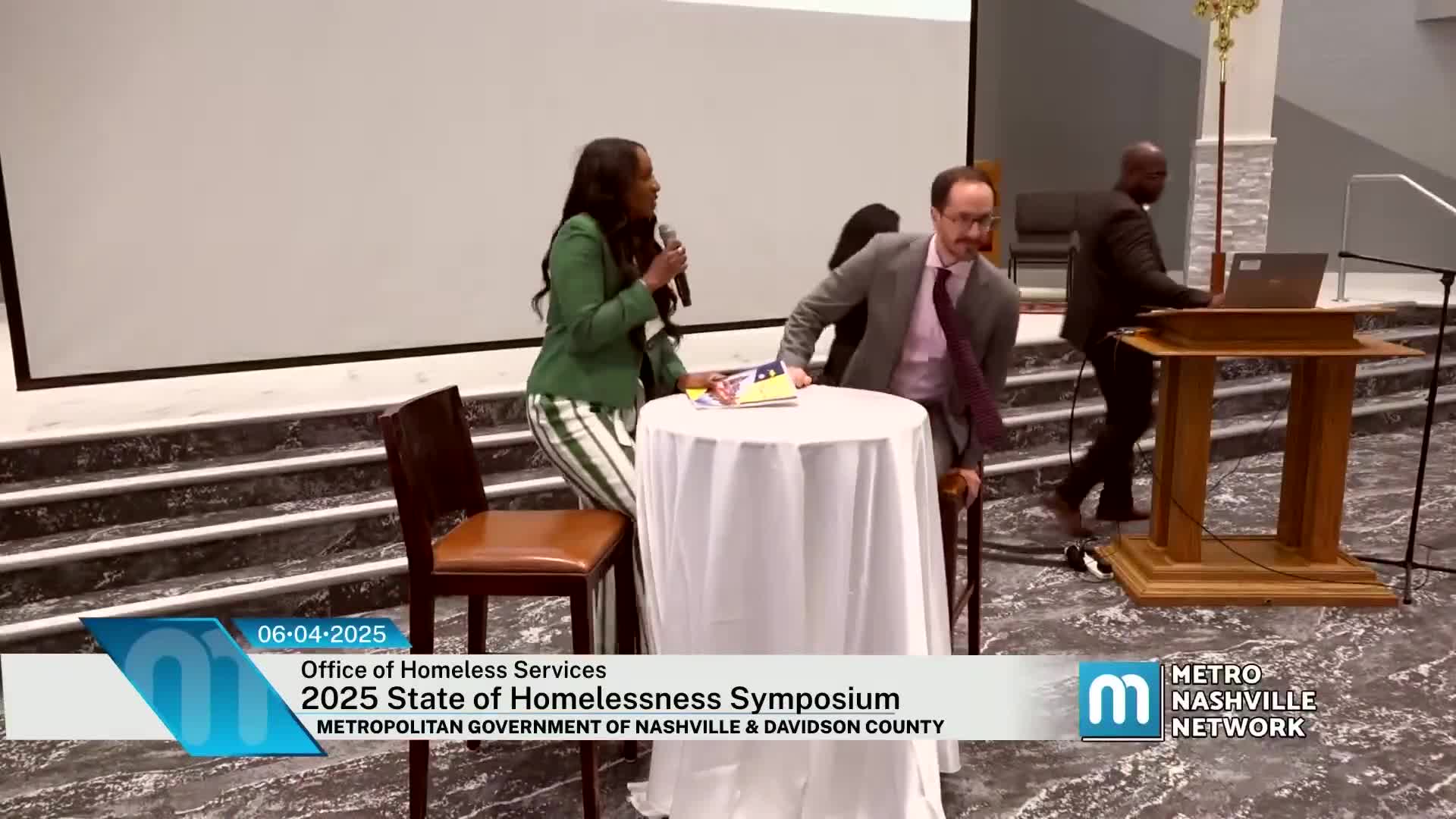
Summary
Mayor Freddie O’Connell told the symposium he supports a decade‑long Unified Housing Strategy, eviction right‑to‑counsel and increased local investments, and acknowledged state law constraints on renter protections and camping on public land.
Mayor Freddie O’Connell participated in a town‑hall style session at the symposium and reiterated the city’s commitment to a unified, decade‑long housing strategy and the need for cross‑sector collaboration.
O’Connell said the Unified Housing Strategy (UHS) provides a ten‑year, benchmarkable framework aimed at producing 90,000 homes across Davidson County and that Metro has proposed its largest single local investment in housing in the mayor’s recommended budget. He described recent deliverables and ribbon cuttings for affordable projects and pointed to Strobel House — Metro’s award‑winning permanent supportive housing building — as an example of operational progress.
On renter protections and enforcement, O’Connell highlighted constraints imposed by Tennessee state law and said that while Metro can expand local programs (he cited the city’s eviction right‑to‑counsel effort), broad statutory renter protections remain a state policy issue. He also addressed encampments: under current Tennessee law, overnight camping on public land is illegal; O’Connell said Metro’s approach is to prioritize outreach, shelter access and safety while acknowledging the limits of local authority.
On vouchers and financing, the mayor echoed other presenters’ concern about federal uncertainty. He said local options and state incentives will be evaluated and that Metro is pursuing multiple tools — including the Barnes Housing Trust Fund, the newly formed Catalyst Fund and partnerships with MDHA (the housing authority). He described the policy challenge: local government cannot, by itself, fully underwrite the capital needed to produce every required unit.
Ending: O’Connell called for continued partnership among providers, landlords, philanthropies and elected officials, and urged symposium participants to remain engaged in implementing the Unified Housing Strategy.