Get Full Government Meeting Transcripts, Videos, & Alerts Forever!
Get email alerts on the Zoning Rewrite Berkeley topic
No spam. Unsubscribe anytime.
Board pauses Berkeley zoning rewrite work to regroup, seeks clearer instructions and redlines
Summary
Supervisors agreed to pause work with the Berkeley Group until staff and the board can present a clearer, single set of directions and redlined comparisons between existing ordinance language and proposed new districts; members debated 30 vs. 60‑day timelines and whether additional public engagement should precede resumed work.
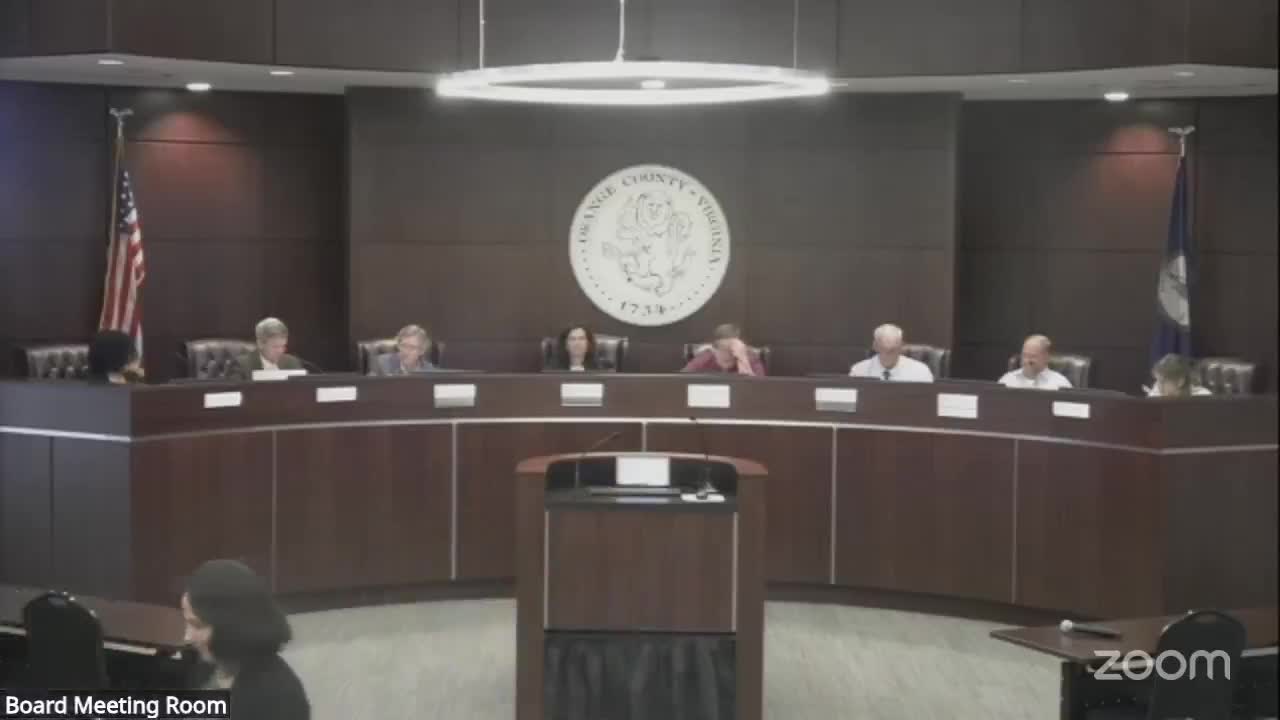
Chairman Johnson and fellow supervisors agreed during a lengthy work‑session discussion to suspend active work with the Berkeley Group on the county’s zoning rewrite until the board and staff can clarify a single set of directions and provide clearer redlines and a menu of options for review.
The county’s planning and Berkeley Group draft—a multi‑section document that attempts to move existing zoning into a new structured format with five new “primary districts”—prompted extensive board discussion about process and clarity. Chairman Johnson said he wanted Berkeley to “suspend operations for the time being, and we'll reengage with them when we are better able to define what our expectations are.”
Nut graf: Supervisors said the draft packet was difficult to parse (existing versus new language), and several members urged that Berkeley present the current ordinance text “plugged into” the new format, highlight substantive changes in redline, and provide an optional sidebar of best‑practice choices so the board can move forward on easier districts while spending more time on the contentious ones.
What the board discussed
Board members differed on timeline and public engagement. Some favored a short suspension—about 30 days—so Berkeley could proceed on the less contentious districts and align changes with the county’s existing zoning language. Others argued that 30 days was too brief given meeting schedules and the need for more internal discussion, and recommended 60 days or longer to build a clear plan of public involvement and internal consensus.
Several supervisors (unnamed on the record) emphasized the need for one clear voice from the board when giving direction to Berkeley, saying the firm has received input from staff, the planning commission and the board in varying forms, and that conflicting messages were making Berkeley’s task difficult. One supervisor said the goal should be “simplicity, usability, and clarity” rather than adding restrictions.
Planning staff responses and next steps
Planning staff members (including Michelle and Ted, by name in the packet) told the board Berkeley already placed old and new language in the packet but acknowledged the format made it hard to see what was changed. Staff recommended pulling out “menus” of optional policy choices (for example, approaches to large‑lot agriculture vs. sliding‑scale lot sizes) and providing redline comparisons showing existing ordinance language alongside proposed text.
Chairman Johnson asked staff to return a concrete proposal for how to proceed; multiple supervisors asked staff to provide an email within about a week with a recommended path forward. The board also discussed pausing the subcommittee and holding focused special meetings if necessary to vet more challenging sections.
Public comment and concerns
A member of the public who spoke during public comment, identified in the transcript as a resident, urged caution, saying the proposed document was lengthy and legally complex and warning that heavy, rapid changes to zoning rules had produced litigation in the county’s past. The resident said, “There’s no way that anybody could be expected to know what’s in it right now as it's written,” and supported the board’s decision to pause and clarify the path forward.
Ending
The board left the Berkeley Group on temporary hold and directed staff to produce a clear recommended process—redlines for substantive changes, a menu of options, and a timeline—for reconsideration at upcoming meetings. Supervisors said the planning commission and the public will be involved later in the formal public‑hearing portion of the land‑use rewrite process.