Get Full Government Meeting Transcripts, Videos, & Alerts Forever!
Get email alerts on the Land Use Rezoning topic
No spam. Unsubscribe anytime.
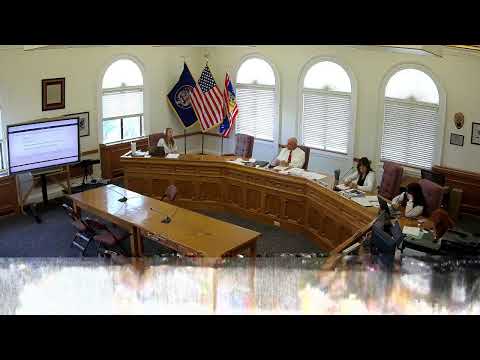
Millard County commissioners approve rezoning of roughly 1,144 acres for heavy industrial use after heated public hearing
Summary
The Millard County Commission voted unanimously June 3 to adopt an ordinance rezoning about 1,143.8 acres from Ag-20 to heavy industrial after a public hearing where residents raised water, infrastructure and quality-of-life concerns and proponents said conditional use permits will address specifics.
The Millard County Commission on June 3 adopted an ordinance changing about 1,143.8 acres from agricultural 20 (Ag-20) to heavy industrial, following a public hearing that drew residents, attorneys representing the applicant and a unanimous recommendation from the county Planning and Zoning Commission.
The vote opens the site for heavy industrial uses but does not finalize specific projects. Planning and zoning coordinator Adam said the location and “the planning commission, after much discussion … made a unanimous recommendation” in favor of the rezoning, and that the particulars of any future project would be handled through the conditional-use permit process.
Why it matters: Rezoning to heavy industrial converts the zoning rules that apply to the parcel and allows a broader set of uses; opponents said the change could permanently reduce water available for residents and farming, worsen traffic and noise, and set a precedent for further industrial expansion. Proponents said conditional use permitting and future mitigation requirements will address those concerns and that the project could bring jobs and tax revenue.
At the hearing, attorney Jason May, representing the applicant, said the planning commission found the application met the county’s rezoning criteria and recommended approval. “We believe that it should be approved,” May said during his presentation.
Several residents spoke in opposition. Cal Ashby submitted multi-page written comments read into the record by a commissioner; Ashby warned that “water is one of the most limited and valuable resources in our county” and said the proposal had not clearly defined long-term water use. Jarvis Jones, who described himself as living “right down the road” from the proposed site, urged commissioners to “please vote no on the zoning change” and said approving the request would risk turning an agricultural corridor into industrial land.
Others urged caution but not rejection. Dennis Aldridge, a resident who said he supported the project, told commissioners many of the detailed impacts opponents raised — including dust and fire suppression — will be considered later under conditional-use review. “All the questions I think that are being raised right now still have oversight,” Aldridge said.
Planning and zoning coordinator Adam explained the difference between rezoning and permits: changing a zoning district makes the uses allowed under that district legally possible, but “there are some uses which require a conditional-use permit,” he said, describing conditional permits as a “Yes, you can with conditions” process in which the county and planning commission set site-specific mitigation for traffic, water, setbacks and other impacts.
Commission discussion emphasized workforce and tax effects as well as local oversight. Commissioner Wright urged county planning for workforce training so local residents could fill potential jobs, and noted past instances where land was rezoned and later returned to agricultural use if proposals did not proceed. Commissioner Lyman, who moved to adopt the ordinance, said she was “a little hesitant” but believed the conditional-use permit process could address many issues.
The commission first opened the hearing, took public comment, closed the hearing by motion, then voted on ordinance 25-06-03. Commissioner Lyman moved the ordinance’s adoption; Commissioner Wright seconded. The roll-call vote recorded both present commissioners as voting yes; Commissioner Johnson was absent. The motion passed.
What happens next: Rezoning does not grant project permits. Any developer seeking to build on the site must apply for specific approvals such as conditional-use permits and any necessary environmental or utility permits. Planning staff said those processes will include additional public notice and evening meetings to let residents comment.
The record: The application was listed as Z-2025-033O on the agenda and included a Planning and Zoning recommendation report. Several residents submitted written comments, which were made part of the public hearing record.