Get Full Government Meeting Transcripts, Videos, & Alerts Forever!
Get email alerts on the Child Protection topic
No spam. Unsubscribe anytime.
Appeals court reviews claim that exclusion of late witnesses denied father due process in child-protection case
Summary
In 24P1017, Department of Children and Families v. father, counsel for the father argued that the trial judge’s wholesale exclusion of late‑disclosed witnesses deprived the father of an adversarial process and required reversal; Department and child’s counsel said the father offered no offer of proof and the exclusion was a proportional sanction.
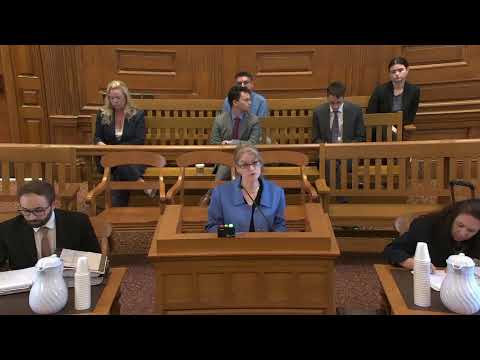
An Appeals Court panel of Justice Mead, Justice Ditkoff and Justice Hirschvang heard argument in 24P1017, Department of Children and Families v. father, on whether the juvenile-court judge abused his discretion by excluding witnesses the father sought to call after a late pretrial disclosure.
Deborah Dow, attorney for the father, told the panel that the trial judge’s refusal to allow the father’s witnesses to testify “completely eliminated the adversarial process” and that the exclusion was a presumptively unreliable breakdown of due process. Dow said the father’s late-filed pretrial memorandum listed multiple witnesses—she identified two particularly, a CASA worker and the father’s therapist—and that the court should have examined whether exclusion caused prejudice instead of imposing a wholesale evidentiary bar.
Aaron McCriss, counsel for the Department of Children and Families (DCF), said the late disclosures—more than 40 days after the pretrial memorandum deadline—prejudiced DCF and the child because DCF had no realistic opportunity to adjust motions in limine, to reframe its case in chief or to prepare cross‑examination. McCriss also argued the record does not show those witnesses would have offered testimony favorable to the father: CASA reports in the record appeared unfavorable, and the father did not submit affidavits or an offer of proof describing what live testimony would have said.
Christine Hamilton Kiros, counsel for the child, told the court the trial judge repeatedly gave the father and his counsel opportunities to explain the late disclosure and to file motions; the judge extended time for filings and repeatedly asked counsel to specify what the witnesses would add. Kiros said no offer of proof was made and that the judge reasonably concluded the proposed live testimony would have been cumulative of evidence already in the record.
The panel questioned counsel about (1) the timing of the pretrial disclosure, (2) the availability of lesser sanctions short of wholesale exclusion, and (3) whether the father had, on the record, articulated the specific prejudice he would suffer. Dow cited appellate authority including Brantley and related cases and said a complete exclusion was disproportionate because parents in care-and-protection proceedings risk losing custody without a full adversarial opportunity.
McCriss emphasized the extensive record of DCF involvement spanning roughly a decade, witnesses’ reports and prior arrests and court orders in 2021 and 2022 the department says showed ongoing concerns about the father’s behavior, and the absence of affidavits or offers of proof from the late-disclosed witnesses. The justices took the matter under advisement following argument; no decision was announced from the bench.
The court’s review focuses on whether the judge abused discretion in imposing exclusionary sanctions absent a showing that the excluded testimony would have changed the outcome or that the sanction was disproportionate.