Get Full Government Meeting Transcripts, Videos, & Alerts Forever!
Get email alerts on the Civil Procedure Rule 60b topic
No spam. Unsubscribe anytime.
Appeals court weighs Rule 60(b) challenge tied to mental‑health evidence and default judgment
Summary
In DeGangi v. Quinn the panel examined whether the trial court abused its discretion in denying a Rule 60(b) motion to set aside a default judgment, focusing on alleged mental‑health impairment, meritorious defenses, derivative versus direct claims, and the proper standard of review.
The Appeals Court heard argument in a commercial dispute in which the appellant sought relief from a default judgment under Rule 60(b), arguing mental‑health issues and other factors made his default excusable and that the trial court failed to conduct the full Baruvi (Rule 60(b)) analysis. Appellee counsel urged affirmation, saying the trial court properly found the appellant was not legally incompetent and did not abuse its discretion.
Why it matters: The case concerns standards for vacating default judgments where mental health or substance‑use evidence is presented after the fact, and it addresses how and when trial courts should weight meritorious defenses and derivative‑versus‑direct injury questions when a default has occurred.
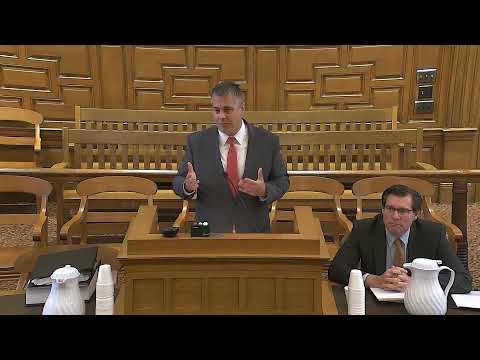
Matthew Wilnicki, arguing for Robert Quinn, told the panel that although finality is important, “60(b) is a holistic approach,” and the trial court should have considered contemporaneous and after‑the‑fact evidence—including a psychiatrist’s opinion—showing Quinn’s mental‑health impairment and its effect on his ability to respond. Wilnicki argued the trial court applied an unduly narrow legal‑competency standard and failed to analyze the Baruvi factors (excusable neglect, meritorious defense, and prejudice) in context.
Plaintiff‑appellee counsel Christopher Marino responded that legal competency requires a higher showing than the mere existence of mental‑health issues and that the trial court had sufficient record evidence to deny relief. Marino said the trial court considered the parties’ briefs, the affidavit evidence, and the applicable law and did not abuse its discretion in finding subject‑matter jurisdiction and in declining to vacate the judgment.
The panel questioned the parties about which aspects of the complaint were direct versus derivative (for example, whether alleged attorney’s fees were corporate or personal losses), how the judge applied the Baruvi factors, and the appropriate standard of review (abuse of discretion for factual determinations; de novo for legal questions). The court did not rule from the bench; the matter remains under submission.