Get Full Government Meeting Transcripts, Videos, & Alerts Forever!
Get email alerts on the Search And Seizure Suppression topic
No spam. Unsubscribe anytime.
Appeals court hears challenge to trial judge’s denial of suppression after traffic stop
Summary
In Commonwealth v. Robert Bruton the panel examined whether officers had reasonable suspicion to order a passenger out and conduct a frisk after a daytime traffic stop, focusing on officers’ inconsistent testimony about movements and a knife found on the driver.
The appeals panel reviewed arguments over whether a patrol officer had reasonable suspicion to order a passenger from a stopped vehicle and to conduct a frisk that led to discovery of a firearm. Defense counsel argued the judge erred in denying a motion to suppress because the record contains vague, non‑specific testimony; the prosecutor urged the court to affirm the denial, saying officers’ combined observations supported reasonable suspicion.
Why it matters: The case tests the boundaries of the stop‑and‑frisk standard when testimony about furtive movements and a nearby passenger’s actions is ambiguous; a ruling could affect when trial courts may allow officer protective measures during traffic stops.
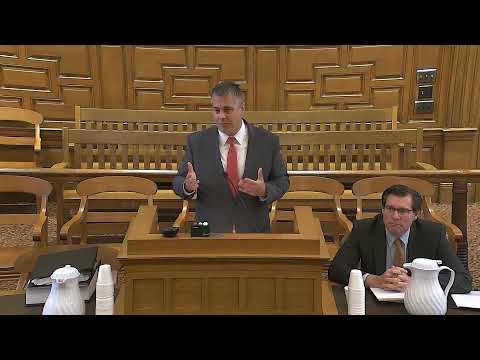
Michael Rusconi, representing Robert Bruton, told the panel the suppression‑hearing transcript is “riddled with vagaries, nonspecific, not articulable facts,” and that officers’ descriptions—such as “I saw his hands where I couldn't see his hands”—were contradictory and insufficient to justify a frisk. Rusconi argued that movements in a vehicle and an ordinary jacket cannot, without specifics, reasonably support a finding that a passenger was armed and dangerous.
Commonwealth counsel Stacy Gauthier responded that a combination of factors justified the exit order and frisk: the driver had been observed two days earlier near a location associated with an illegal firearm, the driver later concealed a knife and misled officers about it, and the passenger made movements officers reasonably perceived as trying to hide an object. Gauthier said the officers’ “continuing observations” together “amped up” their safety concerns and made the frisk lawful.
The justices explored whether the judge’s factual findings at the suppression hearing were entitled to deference and whether the lack of precise description of the alleged weapon or of the passenger’s gestures required reversal. Counsel acknowledged the case was close; Rusconi said the record contained no evidence the defendant was placed in custody or charged with weapons possession, while Gauthier emphasized the officer testimony that the driver had a knife and the passenger made furtive movements.
The trial court’s denial of the motion to suppress remains the operative outcome being appealed; the panel heard argument and did not rule from the bench.