Get Full Government Meeting Transcripts, Videos, & Alerts Forever!
Get email alerts on the Parks Open Space topic
No spam. Unsubscribe anytime.
Parowan commission starts drafting open‑space and park dedication rules; fee‑in‑lieu table proposed
Summary
Planners discussed a proposed policy requiring land dedication or a fee in lieu for new residential subdivisions and additional private open space in higher‑density developments. Staff proposed thresholds, calculations, and options but no formal recommendation was adopted.
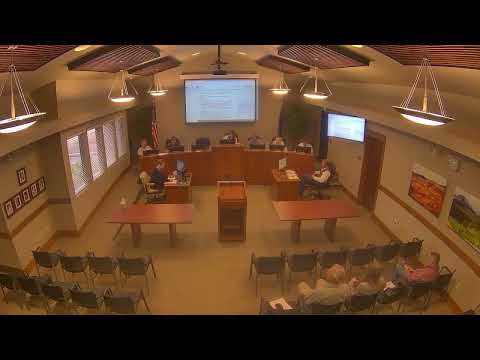
Parowan planning staff presented a first draft of proposed parkland and open‑space requirements for new residential subdivisions at the June 4, 2025 Planning and Zoning meeting and asked the commission for policy guidance.
Why it matters: The city lacks a consistent code requiring parkland dedication or a fee in lieu; city leaders called for a requirement as annexations and larger developments are proposed and to ensure new growth contributes to recreation and open space.
Key points discussed
- Applicability and thresholds: Staff proposed a rule that would apply to residential subdivisions (three or more lots), use gross acreage for calculations, and require land dedication for projects of 10 acres or greater or allow a fee in lieu for smaller projects or where land dedication is impractical.
- Fee‑in‑lieu calculator: Staff presented a sample table that would convert required park acreage (for example 5% of gross acreage, as an illustration) into a monetary fee based on an assumed land value per acre for the zone. Staff noted the land‑value assumption is adjustable and developers could be allowed to submit an independent appraisal for dispute resolution.
- Density and private open space: For higher‑density zones or planned unit developments (PUDs), the draft would require additional common or private usable open space (an example figure in the draft: 10% of gross site area) maintained by an HOA or similar mechanism; staff and commissioners debated whether R3 subdivisions should be required to provide this and agreed it merits further discussion.
- Credits and improvements: The draft allows the city to credit preserved trails, natural buffers or floodways toward required open space if they serve a public recreational or connectivity function and are accessible and improved for public use.
- Administration and funding: Fee‑in‑lieu payments would be placed in a dedicated parks capital or reserve fund to be used only for acquisition or improvement of parkland; staff emphasized the city must avoid “double dipping” (requiring a developer to build a park and also collecting impact fees for the same purpose).
Quotes (selected)
- Dan (staff member): “For subdivisions 10 acres or greater…dedicate land for future parks. Less than 10 acres may pay a fee in lieu.”
- Keith (staff member): “We have to be very careful not to double dip. Each home that gets built, we collect a parks impact fee. We can't make them put in all the parks and collect a park impact fee.”
Discussion versus action
The commission reviewed the draft concepts and requested additional analysis and consistency checks with planned‑unit‑development rules (Title 14 and Chapter 15 references). No vote or formal recommendation was made; staff will circulate sample ordinances from other jurisdictions and refine the fee‑in‑lieu methodology and definitions for future review.
Next steps
Staff asked commissioners to review the draft, search other ordinances for comparison, and return with recommended percentages, fee methodology, and consistent definitions for open space and parkland.