Get Full Government Meeting Transcripts, Videos, & Alerts Forever!
Get email alerts on the Police Operations topic
No spam. Unsubscribe anytime.
Pleasanton police present 2024 operations update; department highlights staffing, ARU outreach and review of uses of force
Summary
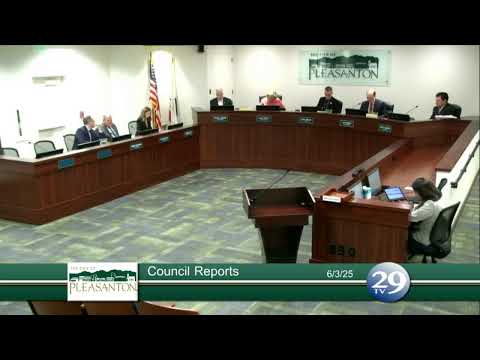
Pleasanton — The Pleasanton Police Department presented a year‑end report on 2024 operations to the City Council on June 3, highlighting declines in reported crimes, growth of an alternative response unit and continued review of use‑of‑force incidents.
Pleasanton — The Pleasanton Police Department presented a year‑end operations report on June 3 covering crime trends, staffing, dispatch performance, alternative response work and use‑of‑force reviews.
Chief Tracy Avelar told the City Council that Part 1 violent crimes (homicide, rape, aggravated assault and robbery) were down about 10% in 2024 and Part 2 property crimes (burglary, larceny/theft, motor vehicle theft and arson) were down about 15%. She cautioned that California’s move from UCR to the California Incident Based Reporting System (CIBRS/NIBRS) changes comparability with earlier years because the new system captures all offenses in an incident rather than only the most serious offense.
Nut graf: The department stressed three operational themes — rebuilding deployable staffing levels, expanding the Alternative Response Unit (ARU) for non‑criminal behavioral health and outreach work, and continued review and transparency for use‑of‑force incidents and complaints. The council pressed for more granular collision location data and for clearer public metrics on emergency (code 3) response times.
Chief Avelar said the department facilitated 58,492 incidents in 2024 and documented force in 87 incidents. "The vast majority of interactions including enforcement situations were resolved without the need for physical force," Avelar said during the presentation. She added that every reported use of force receives multiple supervisory reviews and a Force Options Group review to identify training needs.
The ARU clinician‑officer teams averaged 5.1 calls per day in 2024, handling outreach, welfare checks and encampment work; staff reported 1,268 ARU calls with 508 proactive outreach contacts and 457 calls deferred from patrol. The department also reported 51 holds under the welfare hold statute in 2024 and said ARU clinicians placed 72 holds while patrol placed 86.
Council members asked technical questions. One asked whether the increase in patrol checks and self‑initiated activity reflected staffing changes; staff replied that lack of motor officers in 2024 reduced traffic stops, and redeployment affects statistics. Another question focused on the distinction between a "control hold" and non‑reported control holds; a department official said only instances involving force beyond routine handcuffing were counted in the use‑of‑force totals.
A public speaker asked the department to clarify policy on federal immigration enforcement presence; Chief Avelar replied the city follows state law and that enforcement actions are carried out by uniformed personnel and that the city follows legal guidance on requests for assistance.
Ending: Council members praised departmental professionalism while asking staff to return future reports with collision counts by location, clearer emergency‑response metrics (distinguishing priority 1 from code 3 lights‑and‑sirens responses) and continued updates on ARU staffing and outcomes.