Get Full Government Meeting Transcripts, Videos, & Alerts Forever!
Get email alerts on the Water Drought Rates topic
No spam. Unsubscribe anytime.
Pleasanton council adopts drought-surcharge policy with 8-hundred‑gallon allotment
Summary
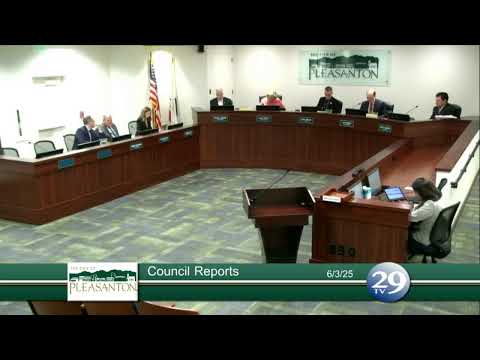
Pleasanton — The City Council on June 3 approved a temporary drought‑rate policy that exempts the first 8 HCF of a customer’s bimonthly water use from drought surcharges, balancing household equity and utility finances.
Pleasanton — The City Council on June 3 approved a temporary drought‑rate policy that exempts the first 8 HCF (hundred cubic feet) of a customer’s bimonthly water use from drought surcharges, a move staff said balances customer equity and the utility’s financial resilience.
Staff consultants said drought rates are a temporary surcharge implemented when the city declares a water shortage and must be designed so the utility remains financially solvent while customers are asked to cut use. "So what are drought rates? Drought rates are a temporary surcharge to deal with restriction of water use due to emergency," a Water Resources Economics consultant said during the presentation.
City staff and consultants framed the 8‑HCF allotment as a compromise: it protects lower‑use households (who have less ability to cut consumption) while placing proportionally more of the drought burden on higher users. Consultants showed model bills for low, average and high users under two policy options: an allotment model (first 8 HCF exempt) and a no‑allotment model (all metered use subject to surcharges). The council voted to adopt the allotment approach.
Nut graf: The council’s action creates a temporary pricing tool the city can trigger during drought stages identified in the Urban Water Management Plan. Staff stressed the drought surcharge would be one of several tools the city could use — including spending from reserves or deferring capital projects — and that the allotment reduces the financial impact on low‑use households.
Council members asked detailed questions about how the allotment works and how response times and billing will be communicated to customers. Sanjay, a Water Resources Economics consultant, explained the practical effect: "So this person did not cut back. You know, they just kept on using their water. So their water bill went up because they've been the surcharge," illustrating how the surcharge applies if customers do not reduce consumption during a declared stage.
The council approved the staff recommendation by unanimous roll call vote (5–0). The motion directed staff to use an 8 HCF allotment when implementing drought surcharges, and to proceed with related outreach and implementation steps. Staff emphasized the allotment is an option the city will apply only if a drought is declared and the council chooses to trigger the rates; other responses — including partial surcharges, use of reserves, or capital‑spending adjustments — remain available depending on the length and severity of a shortage.
Ending: Staff said the city will include the drought‑rate approach in the next public notices and outreach materials and will continue to refine customer communications so residents understand how surcharges would affect typical bills. The policy adopted June 3 creates an operational path to implement temporary drought charges while protecting low‑use households.