Get Full Government Meeting Transcripts, Videos, & Alerts Forever!
Get email alerts on the Utility Shutoff Protections topic
No spam. Unsubscribe anytime.
Health experts and lawmakers back bill to bar utility disconnections during extreme heat
Summary
Public health and energy‑security experts told the committee that disconnections during hot weather create serious health risks; they urged H3972 to prohibit shutoffs from May 15–Sept 30 and whenever the National Weather Service issues an excessive heat warning.
Public health researchers, consumer advocates and a state representative urged the Joint Committee on Telecommunications, Utilities, and Energy to expand Massachusetts' current winter shutoff protections to cover extreme heat periods and summer months.
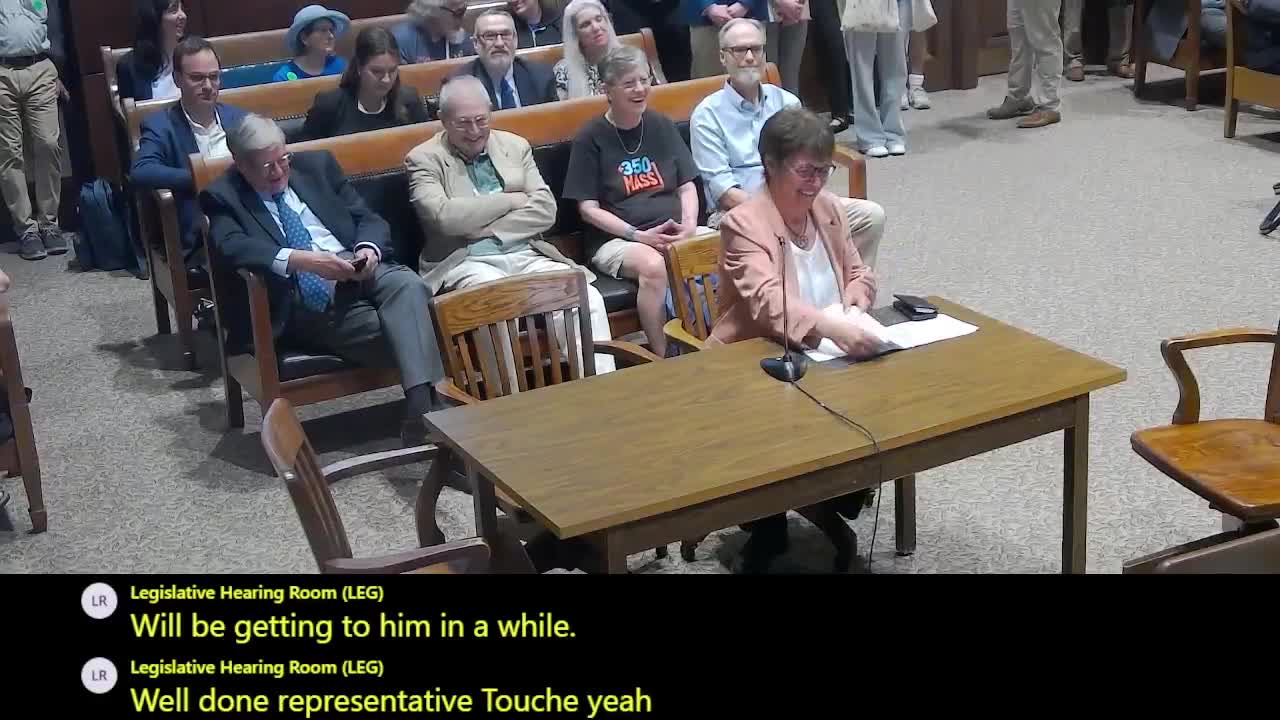
State Representative Indi D'Am testified in support of H3972, “an act providing for utility shutoff protections during periods of extreme heat,” and said Massachusetts already protects consumers during winter and for serious illness but should add a May 15–September 30 moratorium and cover any National Weather Service excessive heat warnings. "Extreme heat can lead to a variety of illnesses, including heat exhaustion, heat stroke, and even heat related deaths," she said, citing state Department of Public Health projections that days above 90°F could double or triple by mid‑century.
Public health witnesses presented data showing the scale of the problem. Representative D'Am said that in 2024 there were 27,448 utility disconnections in Massachusetts and that 60% of those occurred from May through September. Professor Michael Ash of UMass Amherst and Dr. Ari Gold Parker of E3 explained the health and public‑health consequences of shutoffs during temperature extremes and recommended a combination of seasonal and temperature‑triggered moratoria.
Sonya Karley, co‑director of the Energy Justice Lab, said national research and the Lab's disconnection dashboard demonstrate that disconnections spike with extreme weather and that many states already maintain winter moratoria; only roughly half of states have summer protections. She recommended combining date‑based protections with an automatic trigger tied to National Weather Service advisories to cover non‑seasonal extreme heat events.
Supporters also asked for improved data collection on households affected by disconnections and for public information campaigns to inform vulnerable households of protections and assistance options. Representative D'Am requested a favorable report.
No formal committee votes were taken during the hearing. Several municipal and statewide advocates asked the committee to act this session to reduce heat‑related health risks for energy insecure households.