Get Full Government Meeting Transcripts, Videos, & Alerts Forever!
Get email alerts on the Utility Ratepayer Funds topic
No spam. Unsubscribe anytime.
Committee hears proposals to bar utilities from charging ratepayers for lobbying, promotions and perks
Summary
Witnesses and municipal leaders urged passage of S2239/H3400 to stop utilities from recovering lobbying, trade association dues and promotional expenses from ratepayers; supporters cited examples and neighboring states' laws; sponsors said the bill mirrors reforms adopted elsewhere.
Municipal officials, environmental groups and consumer advocates asked the Joint Committee on Telecommunications, Utilities, and Energy to advance legislation that would prohibit electric and gas utilities from charging ratepayers for lobbying, promotions, trade association dues and executive perks.
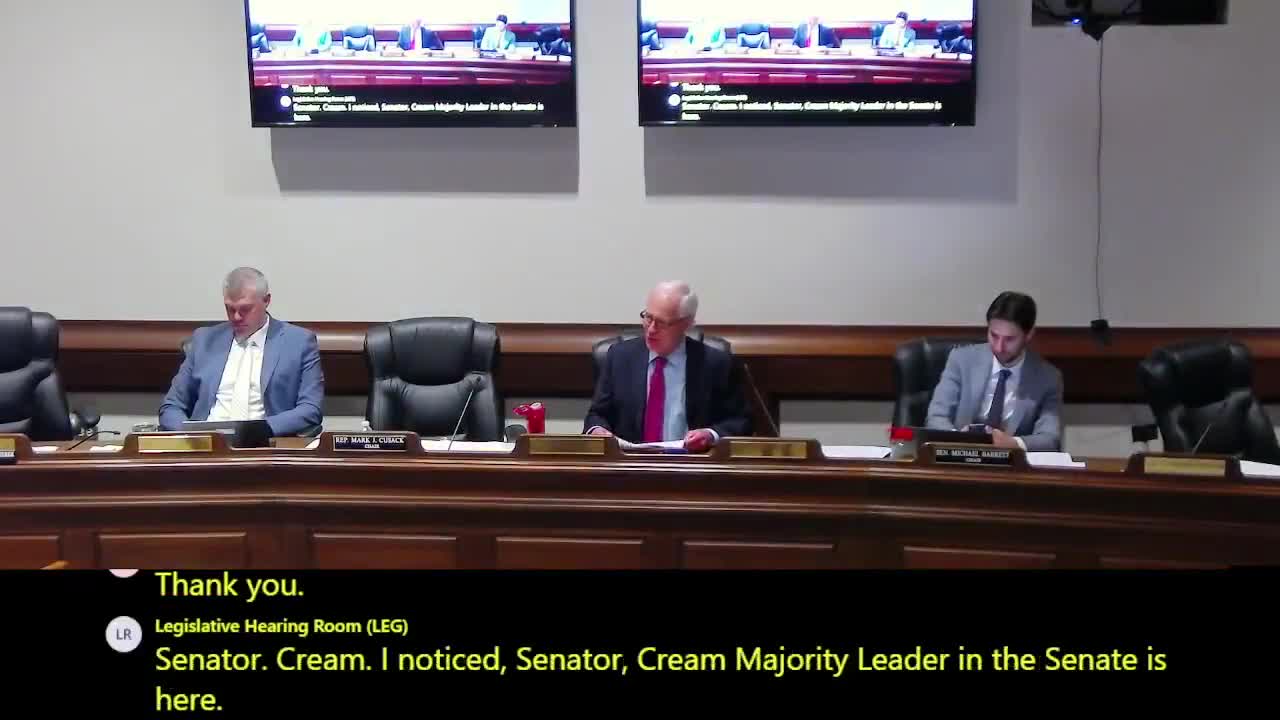
Senate Majority Leader (Sen.) Creem testified in support of S2239 and described the bill as modeled on laws recently passed in Colorado, Connecticut and Maine. She told the committee the legislation "would protect ratepayers and promote energy affordability by prohibiting utilities from recovering from ratepayers the cost of lobbying, corporate promotions, and swag, trade association dues, perks for the board of directors, investor relations, and more."
Witnesses described line items they said ratepayers should not fund. Senator Creem said National Grid paid $385,000 in 2022 to the American Gas Association, citing the trade group's opposition to certain climate policies; others cited branded giveaways and hospitality. Vic Mohanka of the Sierra Club and advocates from Conservation Law Foundation argued that such costs are not needed to provide safe, reliable service and can be used to oppose state climate policy. In Connecticut and Colorado, witnesses said regulators have already disallowed millions of dollars in utility requests after comparable statutes were adopted.
Proponents asked for detailed annual reporting to the Department of Public Utilities so the public and regulators can identify prohibited spending and recover costs when appropriate. Peter Bauer of Gas Transition Allies described S2248 (a related municipal voices bill) as complementary: municipalities, he said, need better information and oversight to prevent unnecessary pipeline projects and to ensure ratepayer funds are used for public interest goals.
Utility representatives and some trade groups urged caution. They told the committee that reasonable distinctions are needed between legitimate utility operational costs and political activity, and they emphasized the need for clear statutory definitions to avoid unintended consequences. Supporters countered that the bill updates language to capture executive lobbying, PAC contributions and trade association spending that current rules may not explicitly cover.
Committee members asked whether the bill duplicates existing DPU authority. Witnesses said the current 1986 precedent limits recovery of legislative lobbying but does not clearly capture executive lobbying, trade association dues used to lobby, branding or promotional costs. Proponents recommended a statutory change to close those gaps.
No formal committee action was taken. Sponsors and supporters asked the committee for a favorable report, pointing to cost savings and transparency already realized in other states that passed similar laws.