Get Full Government Meeting Transcripts, Videos, & Alerts Forever!
Get email alerts on the Public Housing topic
No spam. Unsubscribe anytime.
Housing authorities ask lawmakers for procurement flexibility and tax relief for redevelopments
Summary
Massachusetts public housing officials and MassNAHRO told the committee that changes to Chapter 149 procurement rules and temporary property‑tax treatment for replacement units would speed redevelopment and stretch scarce Affordable Homes Act dollars.
State and local public housing officials urged the Joint Committee on Housing to approve bills that would streamline procurement rules and exempt replacement public housing units from local real‑property taxes in certain redevelopment projects.
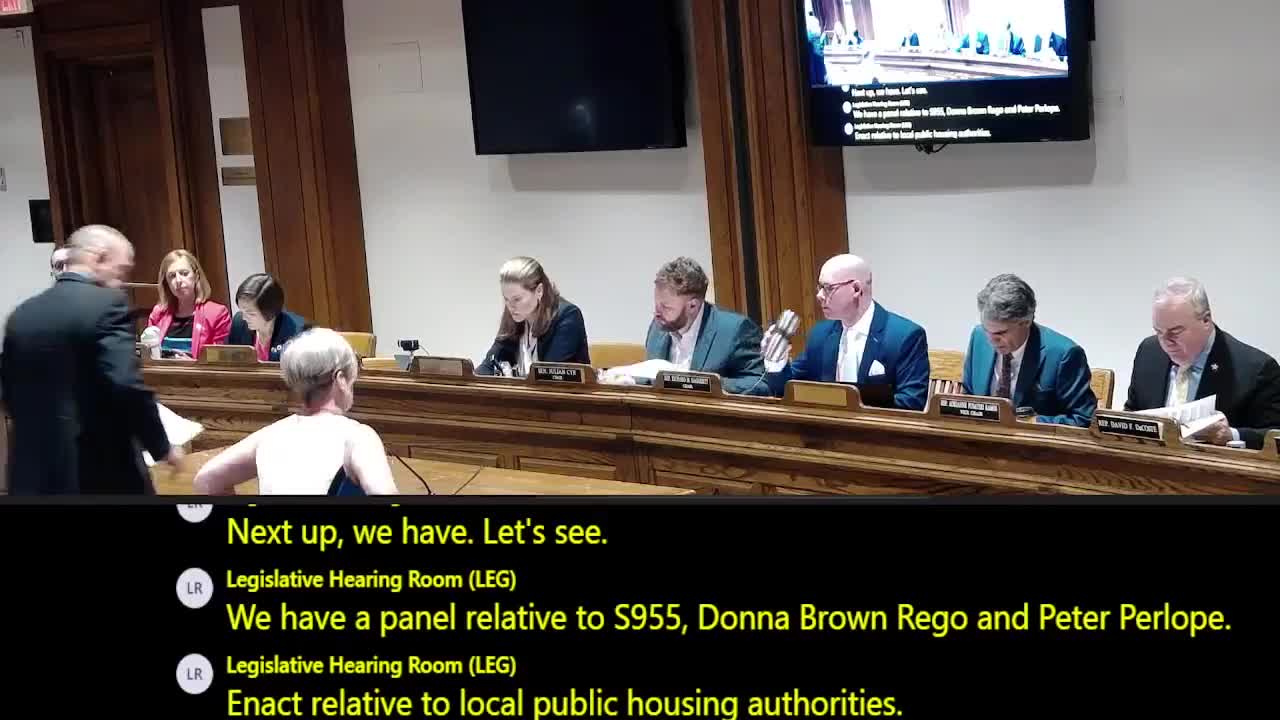
Peter Pru, president of the Massachusetts chapter of NAHRO and president/COO of the Worcester Housing Authority, and Donna Brownrigo of MassNAHRO testified in favor of S‑955 and companion House measures. Brownrigo said housing authorities operate 240 local authorities that serve more than 70,000 low‑income veterans, seniors, families and individuals with disabilities.
Pru described H 15‑50, which would exempt renovated or replaced public housing units from local property taxes when redevelopment replaces demolished units and the developer/entity agrees to a pilot payment. He said exemptions would improve operating cash flow by reducing taxes on replacement units, thereby freeing funds for debt service and to build more units on a site. ‘‘This would only cover those units that are replacement housing units,’’ Pru said, and any non‑replacement units would remain taxable or prorated.
On procurement, witnesses supported H 15‑51 to streamline Chapter 149 bidding rules by eliminating the filed sub‑bid requirement for public housing projects; Pru said the change would reduce project delays and change orders caused when subcontractor relationships do not mesh with the prime contractor, adding time and cost to capital projects.
Committee members asked for practical details, including the prevalence of pilot agreements between housing authorities and municipalities, and whether state and federally funded public housing would be treated similarly under proposed changes. Witnesses said most housing authorities negotiate pilot payments, and recommended parity between state and federal programs.
Ending: Officials urged the committee to report the measures favorably so capital dollars under the Affordable Homes Act can be used more efficiently in redevelopment.