Get Full Government Meeting Transcripts, Videos, & Alerts Forever!
Get email alerts on the Special Education topic
No spam. Unsubscribe anytime.
Student services outlines plans for therapeutic programming, middle/high school supports
Summary
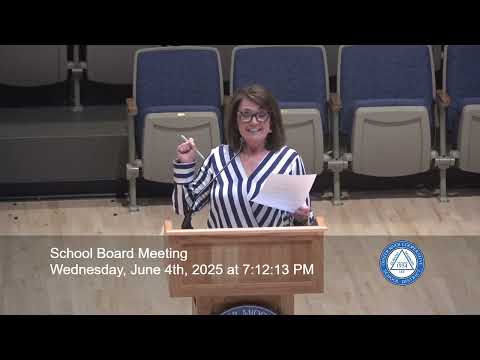
Catherine Plourde, director of student services, updated the board on efforts to expand therapeutic supports inside district schools, including a middle-school program, a district BCBA, a behavioral health position and planned expansion of alternative pathways at the high school.
Catherine Plourde, director of student services, told the board on June 4 that the district is developing options to meet students’ social‑emotional and therapeutic needs without immediate creation of a separate offsite facility.
Plourde said the district evaluated what a stand‑alone therapeutic program would require but noted a principal constraint: available space. “We do not have space to look at growing a program that would be in a different setting,” she said, describing the practical limits on creating a separate campus program without relocating administrative offices.
Instead, the district has taken a multi-pronged approach this year: it hired a district BCBA (Board Certified Behavior Analyst), placed a behavioral-health position shared between the middle and high schools, and built a middle-school program that combines academic and social‑emotional supports with certified staff. At the high school the district plans to expand alternative programming through the existing pathways program to better serve students who need both academic and therapeutic supports while meeting graduation requirements.
Plourde said staff visited a program at Hanover High School to gather implementation ideas and that the district is beginning to work with Seacoast Youth Services to provide short‑term, community‑based support for students returning from hospitalization or in need of interim services. She emphasized the district’s preference for least‑restrictive settings and for giving students practice in mainstream environments: “When you’re practicing skills, you gotta do that in a real world environment…you have to be able to work within a group.”
Why it matters: the initiatives aim to reduce out‑of‑district placements, improve continuity of services, and create graduated supports so students can access general education with appropriate interventions. Plourde said next steps include articulating service criteria for expanded programs and building multi‑year professional‑development plans for staff.
What’s next: expand the pathways option at the high school next year; continue to refine middle‑school supports; consult with external partners and present program designs and resource needs to the board for any future approvals.