Get Full Government Meeting Transcripts, Videos, & Alerts Forever!
Get email alerts on the Education Testing topic
No spam. Unsubscribe anytime.
Oyster River officials review SAT, AP and personalized-learning data; propose summer algebra ramp-up
Summary
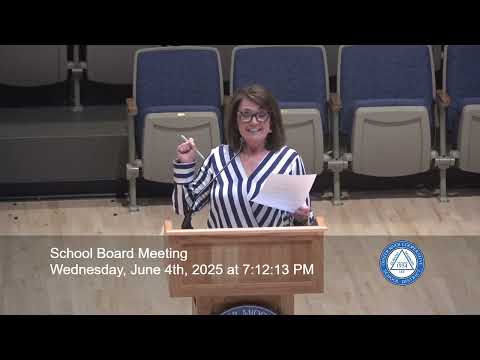
At the June 4 School Board meeting Assistant Superintendent and staff reviewed high-school SAT and AP results and described expansion of personalized-learning options including experiential learning opportunities, CTE growth and a summer algebra “ramp up” for middle-schoolers.
Assistant Superintendent (name not specified) and a district curriculum staff member presented a high-school performance and personalization update on June 4 at the Oyster River Coop School District School Board meeting, showing mixed SAT trends, continued growth in Advanced Placement (AP) and career-technical education (CTE) participation, and new steps to expand student access to higher-level math.
The presentation showed that reading and writing scores have been relatively stable while math proficiency dipped in recent years, and presenters flagged the SAT “advanced math” subsection as an area that needs closer review. “One of the things that we noticed…is that the advanced math section…there’s a little bit of an area that we want to dig more deeply into,” the Assistant Superintendent said. Board members were told the district will analyze course-taking patterns and coordinate with middle-school staff over the summer.
Why it matters: district leaders said the findings affect course placement and supports. To increase student access to higher-level courses, the district plans a summer “ramp up” program aimed at middle-school students who may be close to qualifying for eighth-grade algebra but need targeted review. The district also said it will restore a middle-school math specialist role and continue high-school supports such as math lab and MTSS flex interventions.
Most important facts: the high school offers 12 AP courses; AP participation and the total number of exams taken have risen in recent years, though not every enrolled AP student takes every exam. Presenters said CTE participation has grown from about 28 students in 2017–18 to “well over a hundred” today. The district reported 38 dual‑enrollment/early‑college courses this year with roughly 325 student enrollments, and numerous students take Community College/UNH (CATS) classes when seats are available at the partner institutions.
District staff identified additional follow-ups: a deeper, course‑by‑course look at SAT skills (especially advanced math), a planned review of the high school’s writing scope and sequence in light of recent SAT essay data, and alumni surveys/focus groups in 2026–27 to assess postsecondary preparation. The Assistant Superintendent said the district will track cohorts over time and convene math department and middle-school staff to review possible causes for variation in advanced-math results.
Board reaction and context: board members asked for peer comparisons and disaggregated analyses by subgroup; one member asked that SAT and AP outcomes be compared with identified peer districts (for example, Exeter, Portsmouth, Bedford, Hanover and Dover), and the presenters said those comparisons were already being examined. Board members also raised technology and COVID-era learning disruptions as potential contributing factors to math declines and emphasized the need to monitor recovery trends.
What’s next: staff said they will pursue targeted data dives over the summer, run the middle‑school algebra ramp program, continue math specialist and intervention offerings, and return with results and recommended next steps in future reports.