Get Full Government Meeting Transcripts, Videos, & Alerts Forever!
Get email alerts on the Forest Restoration topic
No spam. Unsubscribe anytime.
Forest restoration projects, prescribed burns and temporary road limits aim to reduce fire and post-fire flood risk on the San Francisco Peaks
Summary
Forest Service and county officials outlined timber-thinning, prescribed-fire and roadside-management projects in the Upper Rio watershed and said the county is investing millions while partners help accelerate work; officials also described motor-vehicle restrictions during stage 2 fire danger to reduce human-caused ignitions.
Flagstaff Ranger District and Coconino County officials described an expanding suite of forest-restoration projects intended to reduce the risk of catastrophic wildfire on the San Francisco Peaks and to lessen the downstream post-fire flooding threat.
"The vast majority of the work that I do, is in service of 1 goal," said Matt McGrath, Flagstaff Ranger District ranger, describing the district’s use of mechanical thinning, prescribed fire and people-management measures to reduce crown fire risk and restore a more historic fire regime. McGrath said planned work across the Upper Rio watershed includes commercial thinning (timber projects), prescribed burns and removal of large slash piles so fuels do not accumulate for later high-severity fire.
Jay Smith, forest restoration director for the Coconino County Flood Control District, described the district’s financial role. Smith said the district allocated $2,000,000 to the Hock project and that the flood control board will invest about $3,000,000 this year in restoration projects, with about $2.4 million budgeted next year. "Out of all those projects that you saw Matt show, only 1 of those has good enough timber to pay for itself to come out of the woods, and that's Wing West," Smith said, adding that most projects require district payment to remove dead-and-down material that has no market value.
Officials listed several named projects under way or planned: Wing East and Wing West (both along Highway 180), Perkins Timber, Hock, Derfer (out for contracting with the National Forest Foundation), LaRue steep-slope work (new specialized equipment to treat rocky slopes, planned for bid in early 2026) and work inside the Fort Valley Experimental Forest. Partners include the Nature Conservancy, the National Forest Foundation, Greater Flagstaff Forest Partnership, and private operators and mills (including an R4 sawmill purchasing Wing West timber).
McGrath described how treated areas look immediately after mechanical work but said they will green up and allow prescribed fire to reduce remaining surface fuels. He emphasized the need for prescribed fire under carefully screened weather conditions and discussed a growing use of infrared drone monitoring to detect residual heat in burned piles.
On public access and human-caused ignitions, McGrath said the county is piloting limits on motor-vehicle access to certain forest roads during stage 2 fire restrictions to reduce vehicle-based campfires and other ignition sources. "We started in 2023...the stage 2 restrictions prohibiting motor vehicles and campfires from being out there during higher fire danger is really an important step for us to take," he said. McGrath and Smith said closures are limited to a small percentage of district roads and that popular trailheads such as Humphreys and Snowball Road will remain accessible by foot or for businesses that rely on road access.
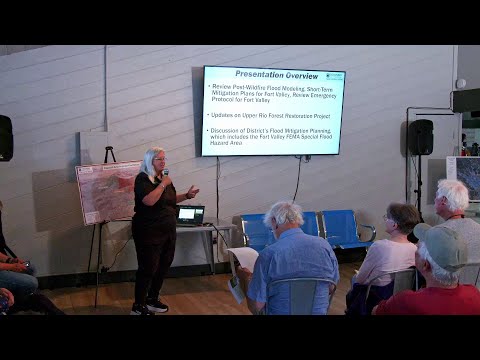
Officials invited residents to meet project staff at briefing tables to review maps and timelines and said the combination of county funding and partner implementation has accelerated projects that were planned but had not yet started.