Get Full Government Meeting Transcripts, Videos, & Alerts Forever!
Get email alerts on the Emergency Management topic
No spam. Unsubscribe anytime.
County emergency-management director explains evacuation zones, Ready‑Set‑Go alerts and how to get notified
Summary
Coconino County Emergency Management described a new zoning system for alerts, countywide emergency notification tools and preparedness steps residents should take ahead of wildfire season.
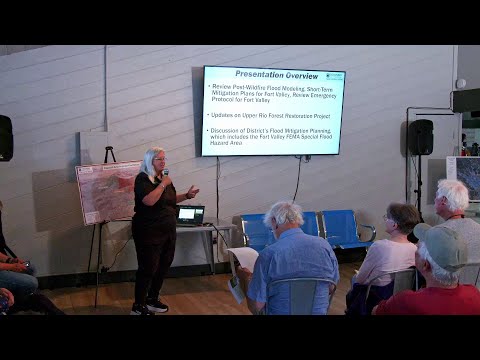
Coconino County Emergency Management on the Fort Valley briefing detailed the county’s evacuation-zone system, how alerts will be delivered and what residents should do now to speed evacuations if a wildfire or post-fire flood threatens.
"We are the county's primary support and coordination agency for disaster response," Tim Carter said, introducing the county role in logistics and preparedness. Carter described the county’s operational approach and the Ready, Set, Go framework for progressive evacuation messaging. "Set stage, that's our old pre evacuation," he said, explaining that residents should have packed "go bags" and keep them in their vehicles during the Set stage because some incidents can shrink the time between Set and Go to only minutes.
Carter said the county and partners developed roughly 200 unique evacuation zones to make public messaging clearer. Each zone has an identifying number and name; he used "Belmont 108" as an example and showed an online interactive map where residents can type an address to find their zone. The county’s notification platform uses Rave Mobile Safety (Smart911) for registration-based messages and FEMA’s IPAWS system for location-based alerts that can reach visitors and tourists without prior registration.
Carter said the county can send alerts by text, phone call, email and social media, and urged residents to register and check contact details often to receive Rave messages. He also described a county function for registering access or functional needs so emergency teams can prioritize checks for people who may require assistance.
On staging equipment, Carter affirmed the county’s role in acquiring and staging large quantities of supplies in a disaster. "When she says we need 800,000 sandbags, I have a phenomenal group that will go scourging the Internet, calling in friends, calling in favors, to make that happen," he said, describing the logistics capacity to source materials in disasters. Carter encouraged attendees to use the county online tools and the QR codes provided at the meeting to find their evacuation zone and sign up for alerts.
For residents, the immediate takeaways Carter emphasized were: establish and check Ready, Set, Go plans now; sign up for the county notification system and verify contact details regularly; use the evacuation-zone map to confirm which zone their property is in; and if they or a household member have access or functional needs, register that information to help first responders.