Get Full Government Meeting Transcripts, Videos, & Alerts Forever!
Get email alerts on the Budget Deficit topic
No spam. Unsubscribe anytime.
City budget office reports large shortfall; mayor freezes discretionary spending and asks departments to propose cuts
Summary
Interim CBO director warned of a combined general‑fund and payroll‑tax shortfall projected at roughly $150 million by the end of 2026, outlined immediate mayoral spending freezes and department reduction targets, and said federal grant reductions increase the risk to city services.
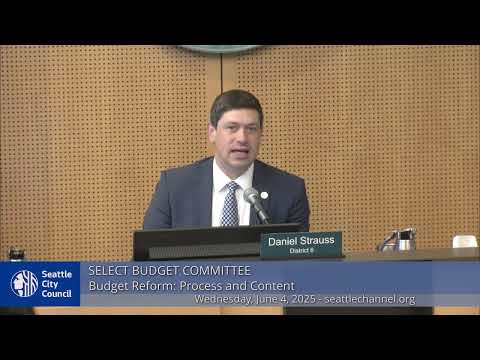
Interim Director Dan Eder of the City Budget Office told the Select Budget Committee on June 5 that an April revenue forecast downgrade and weakening 2024 actuals have created a deficit the city must close. Eder said the city is now working with a revised outlook that removed about $217 million from earlier expectations and that the CBO is “anticipating a hundred and $50,000,000 of combined deficit in the general fund and the payroll expense tax fund by the end of 2026.”
Eder and central staff described immediate and planned actions by the executive to reduce spending and prepare a mayoral proposed budget:
- Immediate steps: On April 11 the mayor froze discretionary travel and training, paused new contracts not already committed, froze spending on new programs and extended a hiring freeze into 2025. - Department targets: Departments were asked for plans to underspend 2025 by 5%. For 2026, most departments were asked to develop ideas for roughly 8% reductions, while departments tied to public safety and homelessness were asked for smaller (about 2%) reduction ideas. - Other measures: Staff asked departments for proposals on early retirement incentives, an inventory of city-funded youth programs, and plans to reduce underspends and grant-management risks.
Eder emphasized uncertainty: two additional revenue forecasts (August for the mayor and October for council deliberations) could improve or worsen the picture. He also stressed that the April forecast did not include some known cost pressures, such as higher-than-expected policing costs tied to a larger-than-anticipated number of officers, which will add to budget strain.
The presentation noted an additional risk: federal grants and commitments that the city had relied on were being scaled back, affecting partners and programs for transit, homelessness services, affordable housing, and other supports the city funds or helps coordinate. Eder said federal reductions represent “hundreds of millions of dollars” in lost support to the region and called attention to the cascading effects on King County and regional partners.
Several council members urged caution about across-the-board cuts and stressed the need to prioritize essential services. Council member Saka urged contingency planning for levy and pre-law scenarios (for example, for transportation or other voter measures). Council member Kettle asked whether the city is exploring AI and other productivity tools as part of “improving city operations.” Noble and Eder said central staff and CBO are piloting analytical work to compare peer cities and evaluate opportunities to streamline services.
Public comment ahead of the briefing highlighted community concern over proposed cuts. Alberto Alvarez, a registered public commenter, said cuts and layoffs will destabilize working-class families and elders and urged taxing “millionaire investors, not regressive cuts and layoffs.”
Ending: Eder and staff said they will continue working with council to produce options, and that the mayor intends to propose a balanced budget built from the August forecast and refined during the October revenue update. Council and executive staff confirmed they will present more detailed analyses to committees over the summer and into the fall.