
Independence board rejects resolution calling for analog AMI opt-out; staff continues AMI vendor selection and public outreach
Get AI-powered insights, summaries, and transcripts
Subscribe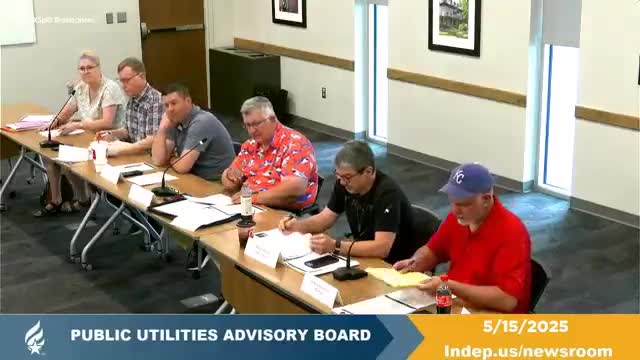
Summary
The Independence Power & Light Board voted down a resolution to endorse an analog opt-out for an AMI (automated metering infrastructure) rollout after staff told the board true mechanical analog meters are scarce and that installing one digital meter per customer and disabling communications for opt-out customers is a more practical approach.
The Independence Power & Light Board voted against a resolution that would have directed the utility to offer an analog opt-out option for an AMI rollout, following an extended discussion of technical feasibility, meter-reading logistics and possible costs.
Board members and IPL staff spent more than an hour discussing how an opt-out could work, including whether an ‘‘analog’’ meter is still available, whether the same digital meter could be installed and have radio capability disabled, and how meters would be read for customers who opt out. IPL staff told the board that older mechanical ‘‘analog’’ meters are no longer broadly produced, and that a practical opt-out approach is to install one digital meter and enable or disable its communications function for customers who choose to opt out.
Why it matters: the resolution sought to commit the board to supporting an analog opt-out, a position some board members said would reassure residents concerned about radio-frequency emissions and privacy. Staff said offering an opt-out will have operational costs — including continued meter-reader staffing or paying crews to collect readings — and that those costs could be passed to customers who choose to opt out.
IPL staff update and procurement timeline Joe (IPL staff) told the board the utility issued an RFP for a project manager for AMI and received nine proposals. The evaluation team reduced that pool and plans to bring three finalists for interviews and presentations; staff said that step likely adds roughly two weeks to the selection schedule. Staff said they are targeting a vendor award in June but acknowledged it may slip into July and that any award will require council approval.
Technical feasibility and meter options IPL staff explained that many modern meters are digital even if they do not have active AMI communications. Replacing meters with a single digital device and selectively enabling communications for customers who want AMI would be easier and less expensive than installing separate mechanical analog meters for opt-out customers. Staff said genuine mechanical analog meters are difficult to source and that older water meters in particular tend to under-register as they age, creating accuracy and safety concerns.
Meter reading, staffing and costs Board members and staff discussed practical options if customers opt out: continuing onsite meter-reading crews, a program that requires customers or meter readers to photograph meters, or maintaining a staffed meter-reader program for a subset of customers. IPL reported it currently has 14 meter readers, and staff cautioned that maintaining meter-reading capacity or hiring contractors adds recurring cost. Several board members said that if an opt-out program imposes extra cost, those costs should be borne by the opt-out customers rather than spread across all ratepayers.
Public reaction and outreach Board members recalled a prior AMI rollout that prompted a large citizen petition and media attention; one board member said more than 5,000 certified petition signatures resulted from that earlier effort. Several members urged an aggressive public education program to address health, privacy and cyber‑security concerns. Staff said community engagement is part of the RFP scope and emphasized that the current phase is focused on education and strategy rather than deployment.
Vote on the resolution A motion to move the resolution to a vote was made and seconded. The board conducted a roll-call vote: Anthony Jeramita — Yes; Greg McGee — No; Steve McCluckie — No; Terry Martell — No; Michael Talcott — Yes; Les Boatwright — No. The resolution failed and will not move forward from the board.
Next steps Staff said they will continue the procurement to select a project manager, develop communications and education materials, and return with more technical and cost information. Any contract award for an AMI vendor or project manager will require council approval.