Get Full Government Meeting Transcripts, Videos, & Alerts Forever!
Get email alerts on the Transportation Sales Tax topic
No spam. Unsubscribe anytime.
Committee backs city attorney interpretation allowing staff labor on street sales‑tax projects
Summary
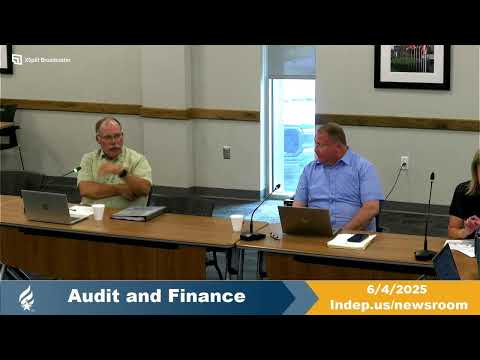
Audit & Finance Committee accepted the city attorney’s legal view that labor and materials directly related to street construction and maintenance are core project costs and not subject to an 8% operating‑expense cap in the transportation sales tax ordinance; the committee approved a motion to adopt that interpretation by voice vote.
City Attorney (legal opinion provided to the committee) told the Audit & Finance Committee that the ordinance authorizing the half‑cent transportation sales tax prohibits using more than 8% of annual revenues for operating expenses, but the term “operating expenses” is not defined in the ordinance. The attorney advised the committee that labor and materials directly used for construction, maintenance and repair of streets, sidewalks, curbs, bridges, culverts and traffic signals qualify as core transportation program functions and therefore are not “operating expenses” subject to the 8% cap.
By contrast, the city attorney said administrative salaries, office supplies and other costs tied to administering the program would be operating expenses and count toward the 8% limit. He explained the interpretation by noting that limiting on‑the‑ground crews and materials to an 8% allocation would defeat voters’ stated purpose for the tax.
Committee members discussed the advisory opinion and several members said they agreed with the city attorney’s reading. One councilmember observed the oversight committee that requested the review did not have full internal consensus and had asked for the council’s guidance. The committee chair asked whether the matter needed full council action; the city manager and city attorney advised the committee that it could resolve the question at the Audit & Finance level and forward the decision to the full council if desired.
A motion to approve the recommendation that labor and materials associated with core transportation activities not be treated as operating expenses under the ordinance was moved and seconded. The committee approved the motion by voice vote with all members saying “aye.” Committee members asked staff to communicate the decision back to the oversight committee and to Councilman Stewart, who serves on that oversight committee.
The committee did not adopt a written amendment to the ordinance during the meeting; the action recorded at the meeting is a committee resolution of interpretation and direction to staff to convey the committee’s view.