Community Development budget adds transit, code enforcement and dangerous‑building funds; council hears collection process
Summary
Community Development presented budget packages that included $350,000 to sustain transit service, $50,000 for code enforcement abatements, and $400,000 from the marijuana sales tax for dangerous‑building demolitions. Staff described the lien process for abatement costs and said demolition capacity would rise if funding is approved.
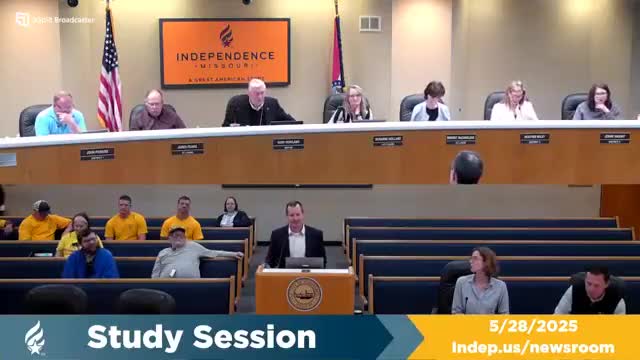
Tom Scannell, community development director, outlined the department’s FY2025–26 budget and a set of approved budget packages that address code enforcement, transit and dangerous‑building demolitions.
Scannell said the department will receive an additional $350,000 for transit to sustain current levels of service and an extra $50,000 to fund code enforcement abatements. He noted that code enforcement operations have increasingly been initiated at staff level—53% of cases are started by staff so far this fiscal year, up from roughly 5% years earlier—and that abatement work yields measurable public‑safety benefits; Scannell pointed to one motel where calls for service dropped more than 30% in the three months after administrative enforcement.
Dangerous buildings: Scannell told council the budget includes a $400,000 allocation from the marijuana sales tax for demolition of dangerous structures. He said the city currently has 35–40 buildings on its dangerous‑structure list and anticipates 15–20 additional cases over the next year; with the department’s current budget the city could demolish about 8–10 structures, while the proposed $400,000 increase would allow the city to remove roughly 32–35 structures in the coming year.
Collection of abatement costs: Scannell described how abatement costs are billed to property owners and, if unpaid after 30 days, are forwarded to finance to be placed on county property tax bills as a special tax lien. Council members asked how often the city recovers those costs; Scannell said he did not have a current percentage at the table but recalled that in prior years a substantial portion of abatement costs were recovered through property taxes.
Other items: Scannell summarized changes to the Unified Development Ordinance (UDO), including regulations for home‑based businesses and new rules for small discount/“dollar” stores, and noted continued work with developers on housing projects (Timber Creek Ranch, Little Blue Estates, McBee Acres). He also discussed the vacant‑structure registration program and how fees escalate with continued noncompliance.
Ending: The items were presented as approved budget packages and department updates during the study session; no final appropriation votes were taken there.