Get Full Government Meeting Transcripts, Videos, & Alerts Forever!
Get email alerts on the Jury Selection topic
No spam. Unsubscribe anytime.
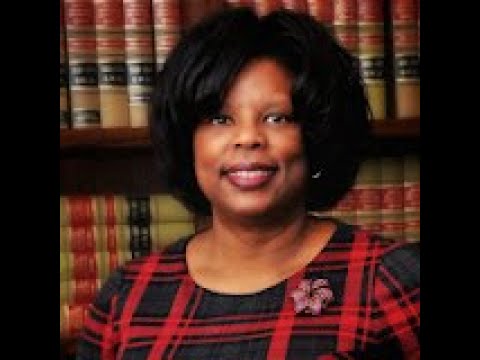
Judge Stephanie Boyd begins jury selection in State v. Rodriguez; outlines burden, presumption and delayed-outcry issues
Summary
Judge Stephanie Boyd opened voir dire in the State of Texas v. Alexander Rodriguez in the 187th District Court. The judge and prosecutors explained the charges and legal standards to prospective jurors, and the state questioned juror views on delayed reporting, memory and types of evidence in child sexual-abuse cases.
Judge Stephanie Boyd opened voir dire in the State of Texas v. Alexander Rodriguez in the 187th District Court on the Fourth Floor, explaining courtroom procedures and the legal standards jurors must apply.
The judge told the panel, “You are in a criminal court. This is the state of Texas versus mister Rodriguez,” and reviewed basic criminal-law concepts including indictment, presumption of innocence and the accused’s right to remain silent. She repeatedly stressed that an indictment is “not evidence of anything” and asked jurors whether they could keep an open mind while listening to evidence.
Prosecutors Zach Dunn and Rick Pena described the three-count indictment the jury would hear: a count of continuous sexual abuse of a child and counts of indecency/sexual contact. Dunn said, “The goal of Voir Dire is, to just find 12 fair and impartial jurors, right, for this case,” and walked the panel through the definitions prosecutors must prove, including that continuous abuse requires acts over a period greater than 30 days and that indecency/sexual-contact counts require proof of touching with intent to arouse or gratify sexual desire.
Both the judge and prosecutors emphasized the differences among burdens of proof. Boyd explained that criminal guilt must be proved “beyond a reasonable doubt” and contrasted that standard with civil burdens such as “preponderance of the evidence” and “clear and convincing evidence.” She told the panel she could not give a single legal definition of “beyond a reasonable doubt” and described it by explaining what it is not.
Prosecutors asked prospective jurors about delayed reporting and the practical realities of child sexual-abuse cases: why a child might not report immediately, the rarity of bruising or other medical findings in older or delayed cases, and the fact that DNA or scientific evidence is not always present. Dunn ran the panel through hypothetical timelines and said the law does not require proof of an exact calendar date for offenses of this type.
Defense attorney Clarissa Fernandez Pratt and other defense counsel made a point of asking jurors about prior jury service, familiarity with local law-enforcement or child-protection processes, and whether jurors could follow the judge’s instructions about presumption, burden of proof and the defendant’s right not to testify. Pratt reminded jurors the defense expects them to be the factfinder and to assess witness credibility: “You decide which witnesses are telling the truth,” she said during her questioning.
Throughout the session Judge Boyd instructed jurors on logistics and courtroom etiquette (for example, how to signal questions with numbered cards and when jurors should stand to speak so the court reporter can hear). The court took a short break during the voir dire and told jurors to return at the posted time.
No verdicts or sentencing decisions were announced during the voir dire. The process continued with both sides using their allotted time to probe potential biases, experiences with law enforcement, prior jury service, family experiences with the criminal-justice system and opinions about memory and delayed reporting.
The court scheduled further voir dire and selection activity to resume after the break.